
The Queen of Versailles
An American Allegory
© Lauren GreenfieldIn 2007 Time magazine chose one of my photographs for its Pictures of the Year: Jackie Siegel’s gold Versace purse beside the metallic ones belonging to her two friends, the three ladies’ fingers dripping with jewels. It ran under the heading “The High Life”, illustrating what the magazine called “a new Gilded Age”. I did not know then that the picture was the beginning of a project that would occupy me for almost 20 years, or that the Gilded Age it announced was about to crash, devastatingly, and then rise again in a form that is now testing American democracy itself.
The party was the opening of the Versace store in Beverly Hills. Elle had sent me to photograph Donatella Versace. Donatella left early; I stayed. The sociological stories I am most drawn to are often on the edges of the assignment, and this room was full of them: caviar, champagne, the actor Rupert Everett and a lot of what a teenager I was filming that same year for my film Kids + Money called four-digit items. Her rule, delivered like a moral code, was that you should never wear anything costing four figures to school. Unless it was a bag.
It was the three bags in that photograph that first caught my eye, with their blinding reflections, and behind them three buxom ladies in head-to-toe Versace. Jackie’s friends told me that she had recently given birth to twins and, as I could see, already had her Amazonian figure back. I was working on a project about how aging was changing, and I was fascinated by the ease with which this woman, exactly my age, 41, produced children at scale and then fit back into Versace skinnies. She was, I would learn, on a different scale altogether: Versace’s best customer, spending, by her own account, about a million dollars a year. Seven digits.


As evidence of her accomplishments — the first of many outsized ones I would learn about — she produced a photograph of seven children and her husband, 30 years her senior, posed on the steps of their private jet. In addition to the aging project, I was several years into a long-term project about wealth. She had me at seven kids on the private jet. But that was only the beginning. Her friends proceeded to tell me that she and her husband were building the biggest house in America, a claim I assumed was apocryphal. She invited me to photograph the family in Orlando. I promised myself I would follow up.
I eventually did when Marie Claire sent me to Florida to photograph the wives of white-collar criminals. I had a free day between unfortunate wives and called Jackie. She said, Yes, please come, and when I asked her to recommend a hotel nearby, she invited me and my assistant to stay in her house without hesitation. That openness was a harbinger of everything to come.
Jackie’s house and family captivated me. Improbably, I had no idea what David Siegel did for a living until my first interview with him. But I soon learnt he sold timeshares: “second homes” bought on an instalment plan to be enjoyed a week a year. Many were middle- and working-class “Johnny Lunchbuckets”, attracted by luxury accoutrements like a big-screen television and a Jacuzzi in the master bedroom. They received a deed they were told could be passed on to their children and were sold the whole arrangement as an investment.
Though David sold luxury to customers who could barely afford it, he and Jackie, billionaires at the time, lived in a surprisingly relatable mess inside a mansion on a private island, their daily lives run by a bevy of immigrant domestic workers — an “upstairs-downstairs” microcosm of the American melting pot.


On that first trip I felt the Siegel story was worthy of a film. Both Jackie and David had rags-to-riches self made American dream stories [this is a famous American saying but if unfamiliar, maybe we should leave out or remove the quotes. ]. With larger-than-life personalities, and their lives offered riveting juxtapositions between the ordinary and the extraordinary. Jackie lived extravagantly and yet was disarmingly down to earth. During our photo shoot the twins’ hands were stained orange with Cheetos while Jackie tried to feed them caviar. [removed paragraph break] The family loved fast food, especially McDonald’s; David felt self-conscious taking the Rolls-Royce through the drive-through and used the courtesy car from his Thrifty rental company instead. Housekeepers cleaned up after a pack of dogs that were never house-trained. The furniture was Las Vegas kitsch mixed with expensive antiques. Jackie seemed easygoing and happy, but was never satisfied — always wanting more.
The Siegels’ superlative home-building project spoke to me because I was interested in how a more-is-more ethos had taken over the American dream. Erecting the biggest house in the country — 90,000 square feet, modelled on the Palace of Versailles — was the most extreme example I could imagine. The material aspirations ran across the socio-economic spectrum of the household: their adopted niece, Jonquil, who came from poverty in Binghamton, New York; their nanny Virginia, who came from the Philippines to make money for her family; their real estate speculator cum limousine driver, Cliff — all carried a version of it.
When I started filming [this unique family building] the largest house in America, I had no idea I would document their collapse. Then, midway through production, when the financial crisis forced the Siegels to put their dream home up for sale, the story I was telling transformed in front of my camera. David’s hubris became the arc of the film: a man who would build so big, want so much and leverage himself so far that he lost nearly everything. What happened to the Siegels was a supersized version of what happened to millions of Americans, and to more abroad — from Florida to California, Ireland to Iceland — many of them middle- and working-class people who had gambled on cheap loans that banks sold with little regard for anyone’s ability to repay them. The costs of David’s overreach also hurt the people who relied on him: Westgate laid off 7,000 employees, and inside the house the domestic staff went from 19 to four. By the time The Queen of Versailles premiered at Sundance in 2012, it had become a morality tale of the 2008 crash, one audiences recognised from their own lives.
But I had no idea of something more unexpected still: that the Siegels’ unapologetic comfort with their own excess, the near-feudal relationship with the domestic staff who ran the house, the political influence David assumed came with money and exercised with an easy tolerance for corruption — that all of it would become official White House policy and the governing values of a new American oligarchy, led by a Siegel acquaintance and Florida neighbour whose own gilded mansion sits a few hours away in Palm Beach. As he had with many Republican candidates (he called himself a “kingmaker”), David supported Donald Trump’s campaign, telling the Orlando Sentinel that Trump’s election was “the greatest thing that happened to me since I discovered sex”.
The Siegels named their home-to-be “Versailles,” unbothered by the fate of its most famous resident. When I gave the film its title, I worried Jackie might take offence at the Marie Antoinette reference. Instead, she leaned in. To Jackie, Marie Antoinette was not a queen reviled for her extravagance while her country starved, and beheaded when the revolution came. She was a woman who owned a spectacular palace. Still, I did not read any of this as prophecy at the time. I did not see how many parallels there would be between David Siegel and a president who later posted images of himself wearing a crown, joked about an unconstitutional third term and traded on the office to make a personal fortune with impunity — and, courtesy of the Supreme Court, immunity.


I was thinking about these parallels while we were opening the Queen of Versailles musical on Broadway. With uncanny timing, at the very moment Kristin Chenoweth and F. Murray Abraham were playing David and Jackie Siegel, backed by a chorus of the French court with Louis XIV and Marie Antoinette among them, Donald Trump began bulldozing the East Wing of the White House to build a 90,000 sq ft ballroom — the exact same size as the Siegels’ Versailles — in a style which cultural commentator Peter York aptly named “dictator chic”. The federal core of Washington was built with deliberate neoclassicism, Jefferson’s Rome rather than Louis’s France, chosen precisely because it was not the architecture of kings.
The Siegels’ world and Trump’s had overlapped for decades. Jackie has said she once dated him. When David built the largest timeshare tower ever constructed, Trump asked him to dim his sign, which outshone the Trump sign down the road on the Las Vegas Strip. So I should not have been surprised when, in November 2025, Jackie showed Trump a photograph of herself in her own nearly finished Disneyworld- adjacent ballroom. By then her husband had died and her children were grown — all except Victoria, her eldest, who died of a drug overdose in 2015. Trump, she told The Independent, responded, “I wanna come see your house. And maybe use some of [your] people for the ballroom.”
The similarities between Donald Trump and the Siegels were never limited to a love of oversized, monarchical architecture laden with marble, gold and enormous phallic columns. Trump, like David, loves beauty pageants and uses beautiful women to advertise his success.
The parallel between David’s appetite for real estate expansion and Trump’s is obvious enough; in office, Trump has expressed his America First policy as a colonial desire for acquisition, threatening to take over foreign territories such as Greenland and Canada. Both men understood that money and power travel together — that money was the ticket to kingmaking and political influence.
Under Trump, this adoration of the rich, and his insistence on their deference to him, has driven the rise of oligarchy as a political, economic and cultural force. Even the Siegels’ unsuccessful lawsuit against our film was straight out of the Trump playbook in its anti-democratic effort to use the courts to silence the press.
The Siegels, it turned out, were not an anomaly but a bellwether. They were the fullest expression of a shift in values I began documenting in Generation Wealth — away from an American dream defined by the Protestant virtues of hard work, humility and frugality and towards one defined by acquisition, fame and bling. The Gilded Age that Time named in 2007 was a figure of speech. The one that rose again is measured in actual gold leaf, on Pennsylvania Avenue. When a reality television star who put his name in lights on tall buildings was elected president, the Siegels’ story stopped being a cautionary tale and became prologue.


The comedy of The Queen of Versailles did not obscure the moral of the story. The bank foreclosed on the mansion, and though they eventually got the property back, the palace remains unfinished 14 years after the film’s release; David did not live to see it completed. The schadenfreude enjoyed by the film’s audiences was a kind of moral bookkeeping: the excess had a price, and the people who ran up the bill paid it. When the same appetite, the same gilt, the same conviction that money confers the right to rule migrated from a mansion in Orlando to the White House, the consequences stopped falling on the people who indulged them. They fall on everyone else — on the civil servants fired, the journalists sued in an attempt to silence them, the allies threatened, the institutions hollowed out to build a ballroom. A family losing its palace is comedy. A country losing its republic is not.
So while viewers around the world laughed at the over-the-top behaviour in The Queen of Versailles [to avoid repeating “comedy of TQoV” in previous par], those of us who believe in American democracy — and who assumed monarchy was something America had left behind for good — are not laughing now. In ways we could not have imagined, even in our worst nightmares, we are left to reckon with what AO Scott wrote in his New York Times review of the film: “Marvel at the ornate frame, mock the vulgarity of the images if you want, but let’s not kid ourselves. If this film is a portrait, it is also a mirror.”
Lauren Greenfield is the author/photographer of ‘The Queen of Versailles: An American Allegory’ (Lannoo, 2026).
click to view the complete set of images in the archive
Heirdom
© Sasha MaslovIt is late February 2022. My aunt and cousin hold each other, trembling in the back seat of my friend's car. Russian fighter jets whiz through the gray winter sky. Artillery fire booms overhead. The Russian Army is advancing on Kharkiv.
Like generations before us, my aunt and my cousin are fleeing from war. They are the last pair from our family to escape to the West. They are bringing only what they can carry, and what feels most important.
My cousin clutches a small backpack with a few bare essentials. Inside are three precious family photographs: a portrait of our grandmother, a photograph of my cousin’s father — my uncle who has since passed away — and a picture of her parents on their wedding day.
As they head west from Kharkiv, I fly east from New York. We meet in Warsaw, where my cousin lays the three photos on a table in our friend’s apartment. I look at the familiar faces and understand that my entire family is now made up of emigrants and refugees. All we have left are photographs like these, and the memories we carry with us.
People escaping calamities and searching for safe haven have always carried such fragments with them. They have hidden them in the lining of their clothing as they crowded into train cars, threw their belongings into horse-drawn carts, ran through the darkness of night, bribed border guards, pleaded for help, and looked back one last time at their houses burning behind them, knowing they would never return home.
In their displacement, these small possessions, no matter how simple, take on a new meaning. They are all that is physically left to remind them of their identity and heritage.
For centuries, Ukrainians have fled war and political upheaval. They have arrived in new places where they are gradually shaped by new societies. They have contributed what they brought, taken what they needed, and become part of something different. They are the ones who left. The ones who stayed have been forced to eventually accept a new rule or order. Many have died fighting. Others are stripped of their heritage and memories. They are told to forget and to adapt — or else.
The idea for this book emerged as I began to understand what Russia’s full-scale invasion of Ukraine is really about. It’s simply about one nation, Russia, believing another nation, Ukraine, has no right to exist. Of course, it is also about territory, resources, and geopolitics. It’s a bit about the global spheres of influence and large business interests. It is about pure domination and a show of raw, grotesque, brutal power. But under all of it - it’s the pure and sincere belief of the Russian state that Ukraine has no place on the map, in the history books, or anywhere else.
For centuries, Russia has projected the authority of a superpower while suppressing Ukrainian voices. Like in other countries it has invaded, it has called its new subjects Russian, and taken credit for their achievements. Russia has appropriated the cultural, scientific, and literary accomplishments of the territories and peoples under its control. The world bought into this. The violence and oppression, whitewashed through years of cultural and scholarly diplomacy, ended up on signage and in catalogues of reputable art institutions throughout the world with labels like “Russian” or “Russian-born.” It has rewarded Russia for its crimes by reducing the struggle of each artist and their vision of who they were and how they saw their work.
Since its independence in 1991, Ukraine has urged global museums and art institutions to acknowledge that artists born under various iterations of Russian authority cannot be automatically labelled Russian. That fight intensified after the full-scale invasion in 2022, as the brutality of the invasion forces the world to reckon with its own reduction of Ukrainian identity and finally grant more legitimacy to Ukrainian voices.


In March 2023, New York’s Metropolitan Museum updated labels for artists including Ilya Repin, Ivan Aivazovsky, and Arkhip Kuindzhi to acknowledge their Ukrainian origins. Helsinki’s Ateneum also changed its catalogue entry for Repin to identify him as Ukrainian. That same year, London’s National Gallery renamed Degas’s Russian Dancers as Ukrainian Dancers, saying the dancers’ clothing was always Ukrainian and that the Russian title was only added later.
These are small details that make a difference.


This war is a continuation of a long track record of erasure and appropriation. It is more than a territorial or political struggle. It is another assault on Ukraine’s identity and on its right to self-determination. A central part of that assault involves the attempted destruction, theft, appropriation, and rewriting of Ukrainian culture and heritage.
Russian museums today host a vast collection of Ukrainian art, Ukrainian Cossack artefacts, Hetman regalia, flags, and royal charters that were either removed from Ukraine or seized by Russia throughout history. The primary, large-scale removal of these artefacts took place following the surrender of Hetman Petro Doroshenko in 1676, as well as after the final destruction of the Zaporozhian Sich by the forces of Catherine II in 1775. At that time, Cossack relics were moved to Russia as war trophies and never returned despite multiple attempts by Ukrainian historians and archivists.
The St. Petersburg Hermitage’s website lists a long list of artefacts from a country that never existed, called Malorossiya (Small Russia). These objects were mostly looted from Ukraine over the years. They are now neatly categorised, photographed, and fitted into the current Russian doctrine that Ukrainians are part of the Russian cultural tapestry.
In late October 2022, a few days before Ukrainian troops retook the southern city of Kherson, several Russian buses and trucks pulled up to the gates of the Kherson Art Museum. Over the next days, occupying Russian forces cataloged, packed, and loaded thousands of works from the museum’s basement storage. Then they sent 10,170 items into occupied Crimea. That collection is now being categorised somewhere, legitimised by the Russian laws and orders that will rename, relabel and reimagine the items as Russian.
Amid the violence of war, many Ukrainians have come to a profound understanding of what heritage and cultural memory mean to their sense of self. This awareness shaped society’s response at social, political, and personal levels to fight Russian aggression. It gave new urgency to efforts to preserve what can still be preserved, and protect what can still be protected. It helped Ukrainians understand how much has already been taken away from them, as they try not to lose even more.
Across the country at war, Ukrainians are actively grappling with how to interpret their own identity while fighting, surviving and imagining the future of Ukraine. Museum workers, archivists, historians, scholars - suddenly, these professions were carrying almost a spiritual meaning, as they held the sacred knowledge of history, culture, language, folklore, and art. And those are the people who, while saving what they can save, often risking their own lives, also continue their work in researching what Ukrainian heritage is today. Which is a very complex task, as it pertains to deconstructing the past heavily influenced by colonial and imperial powers that often erased large portions of that very heritage, and are now attempting to erase it again.
This series is about these people - who not only preserve the priceless artefacts, pieces of art, and history but also help to shape what will become the heirdom of tomorrow’s Ukraine.
They pay a very heavy price for it. Many museums and cultural heritage sites remain under constant attack, the working conditions are often extreme, and the reward for their work is modest. But despite that, they persevere.


After I finished shooting this project and working on the text for this series, destruction continued.
The National Arts Museum in Kyiv had to finally close its doors after sustaining damage from a missile strike on May 26, 2026. Kharkiv Art Museum was hit by a Shahed-type drone on June 14, 2026, heavily damaging the building and destroying part of the collection that still remained. Museums working closer to the frontline in Kramatorsk, Sloviansk, and Sviatohirsk are no longer operating. The landscape where they once thrived is now a scene of death and destruction of everything living, including memory.
By the time I am writing these words, Russian strikes on publishing houses and infrastructure have destroyed approximately 13 to 15 million Ukrainian-language titles. These attacks are not random. They are a planned and systematic erasure of Ukrainian identity.
With missiles, drones, and extreme violence, Russia is telling Ukraine: you are not heirs of your own past, as you have no heritage.
In early July 2025, I walk into my family home in Kharkiv. In my line of work, I have visited many bombed-out buildings and burned apartments. I have sifted through the remains of many other people's homes and memories. But to walk through the doors of my own childhood home, where I remember every nook and cranny, is different. Personal. Like someone tried to erase all my memories with one swift move. The floors are covered with shattered glass, the doors blown off their hinges. Most of the windows are gone, and stuff is thrown around by a blast wave. Among the shards of glass and random things, I see my mom’s old student ID. I pick it up and put it in my pocket.
I pack all the remaining family photos I could find in the apartment, blaming myself for not doing it earlier. Like the heroes of this book, I want to preserve every piece of our memory. So I can tell our story later. Before it’s too late. Before someone else might try to tell it for me.


Today, Ukrainians are fighting with ferocity. They are fighting for their land and for their people; they are fighting for their language and their songs; they are fighting for the ability to decide for themselves who they are. They want to preserve their memory, even as it is being violently taken from them.
They want to tell their story themselves.
click to view the complete set of images in the archive


Legacy of War
© Giles DuleyAfter five years of war, estimates suggest over half a million Ukrainians have been injured defending their country. It is largely a citizen army that volunteered to fight following the full-scale russian invasion of Ukraine in 2022. Bakers, poets, mechanics, office workers, students…and many have paid a heavy price for their service. Modern warfare and medical advances have resulted in many surviving complex trauma that in previous conflicts would have meant death. Instead, these veterans must learn to live with the resulting scars and disabilities - injuries that do not define them as people, but are so often the focus when they are photographed. In this project, we did not pose the sitter or light in dramatic ways. Rather, we asked: how do you want to be photographed? “With my best friend,” “from both sides, to show the contrast” or “I don't care!” followed by laughter. This is a series about life; a celebration of lessons learned through the bitterness of war. I myself have been on the journey of self-discovery that follows a traumatic injury. I know what it is to reconstruct a life and, in doing so, discover your inner strengths.
These veterans were injured by hatred, but rebuilt by love. Their journey ahead will not always be easy, but it can be a full life. Often our scars become the strongest part of who we are. Each an individual, each portrait a different story.
click to view the complete set of images in the archive


IRL (In Real Life)
© Niccolo’ Rastrelli
IRL (In Real Life) is an ongoing photographic project that explores the identity and representation of Generation Z — the first to grow up in a world where real and digital life merge seamlessly, redefining boundaries, relationships, and forms of personal expression. Through a documentary and intimate approach, the project portrays young people within their most personal spaces — their bedrooms — juxtaposing these portraits with images taken from their smartphones: selfies, stories, posts, and screenshots that shape their online presence. Two visual worlds, one physical and one digital, intersect and overlap to authentically narrate the complexity of contemporary youth.Born between the late 1990s and the early 2010s, this generation uses images as a language — a tool for identity and belonging. IRL observes how, from Milan to Delhi, Nairobi to Buenos Aires, the same digital gestures and symbols have become a global code, while still reflecting different cultures, dreams, and contradictions.
The project’s ambition is to expand across all continents, building a visual archive capable of capturing both the universal and intimate dimensions of a connected generation. In the long term, IRL will evolve into a series of international exhibitions and a book — creating a space for dialogue between young people and adults, cultures and languages, the real and the virtual.
click to view the complete set of images in the archive.

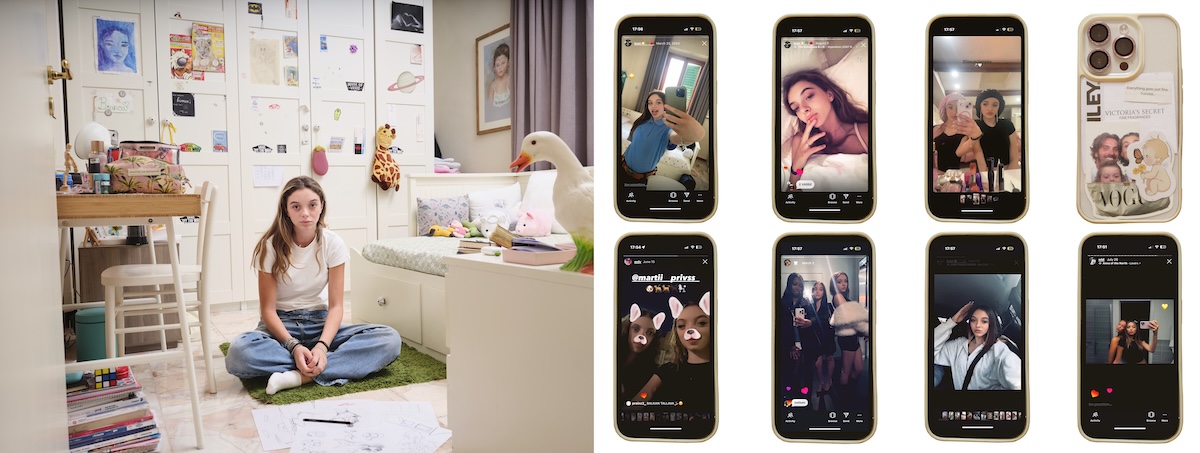

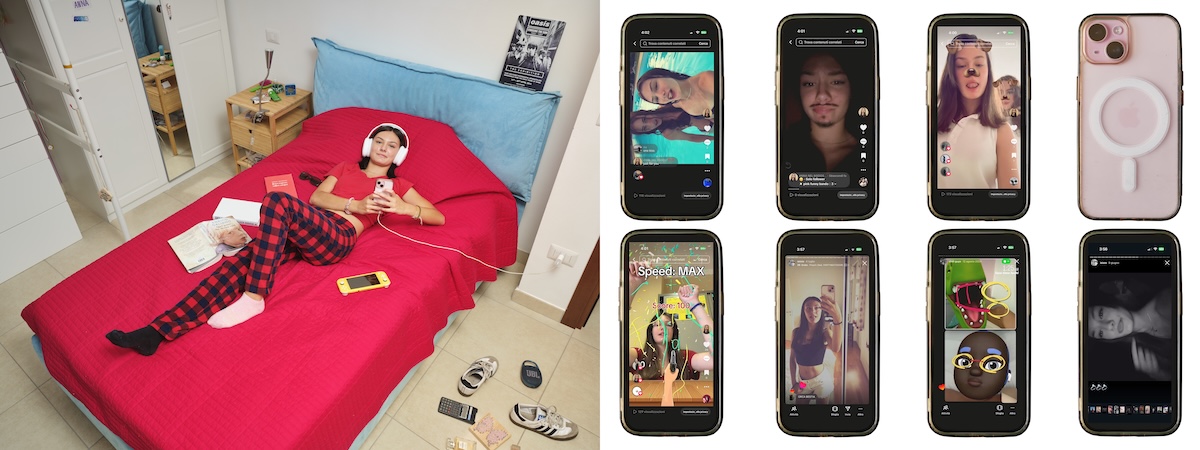

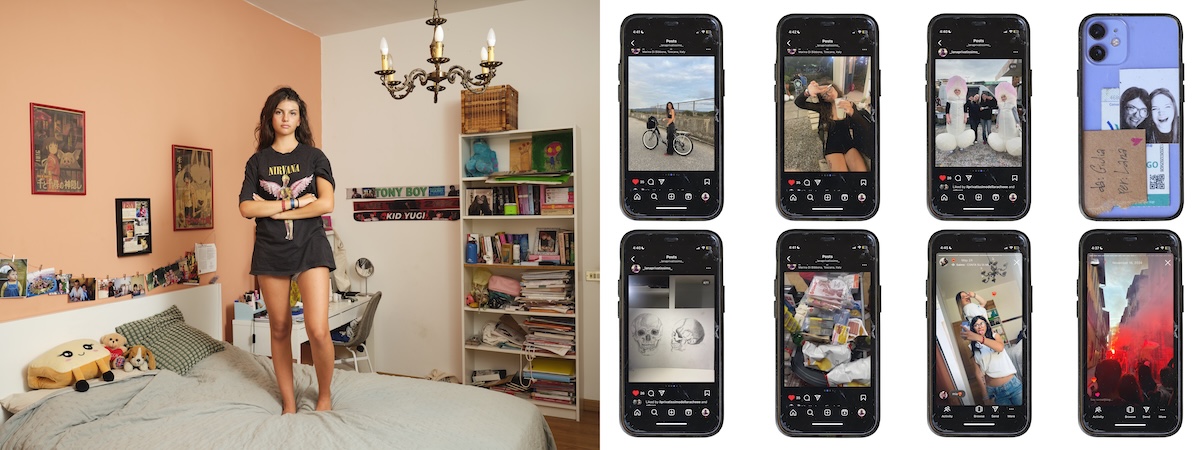
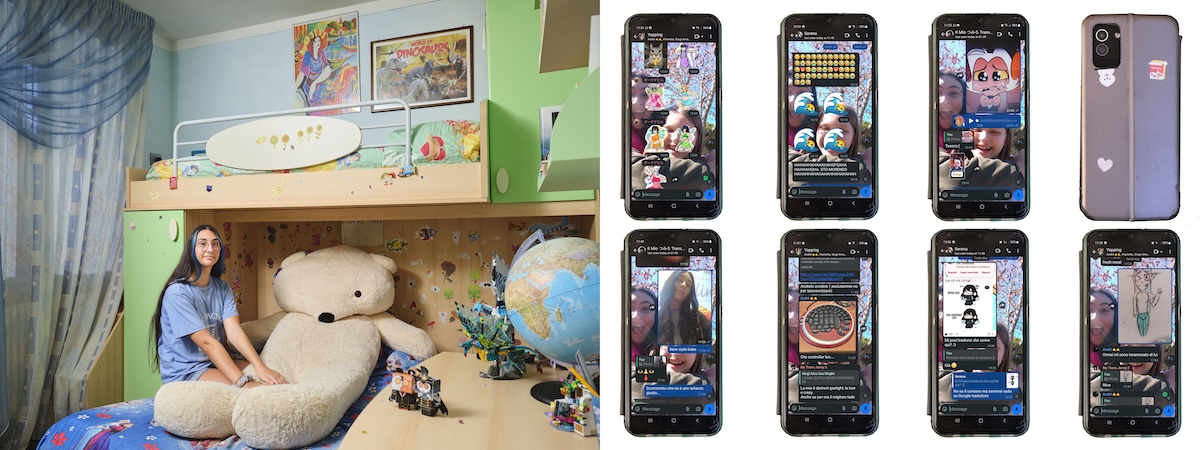

Inside the IAEA
© Alastair Philip WiperAsk most people what the International Atomic Energy Agency does, and you will probably get vague and ominous descriptions of rogue states trying to build nuclear bombs, uranium enrichment, safeguards inspectors and treaties being broken.
This reputation isn't bad, exactly. It's just that there is much more to the story.
Behind the same facade, scientists are doing something almost nobody expects: irradiating banana plants to save the world's most popular variety from a fungus that could wipe it out. Breeding billions of insects a week, sterilizing the males with radiation, and releasing them to collapse malaria-carrying mosquito populations. Reading the isotopic fingerprint in a jar of honey to determine whether it's fraud.
Exposing seeds to radiation to shorten a process - genetic mutation - that would otherwise take a plant species thousands of years.
Beyond the bureaucratic, high-security machinery of nuclear diplomacy happening in the corridors and meeting rooms of the Y-shape IAEA headquarters in Vienna, a strange, hopeful, largely invisible science is happening - cancer treatment access for the world's poorest regions, contaminated water cleanup, forensic crime-scene analysis, tracing Earth's 4.5 billion-year-old water supply.
The IAEA is an agency built in the shadow of the bomb that spends most of its energy quietly trying to feed, heal and protect the world instead.
Photographed at the IAEA's headquarters in Vienna and its laboratories in Seibersdorf, June 2026.
Click to view the complete set of images in the archive


InstituteTM (collectively Institute Pictures, Institute Studios, & Institute Artist) is redefining how stories are produced and told in the 21st Century. Founded by Producer Frank Evers and Director/Visual Artist Lauren Greenfield, we are a multiplatform production company representing auteur-driven storytellers across commercials, photography, fine art, film, and technology — and producing original work across every screen that those stories live on. Our multiplatform expertise and established global relationships in entertainment, commercial, fine art, and journalism create unmatched reach and cross-pollination of creative work. A film commission informs a photography campaign; a fine art practice shapes a commercial; an editorial relationship opens a documentary. Few companies operate fluently across all of these worlds. Institute was built this way from the ground up.
Clients include: Apple, Google, Meta, Amazon, Microsoft/Xbox, LinkedIn, WhatsApp, Nike, Adidas, Lululemon, Under Armour, Dove, Maybelline, Clinique, Ulta Beauty, Aesop, Vaseline, LEGO, Balenciaga, Dior, Tom Ford, Kenzo, Supreme, Van Cleef & Arpels, Mercedes-Benz, Volvo, Toyota, McLaren, Pennzoil, American Express, Chase, U.S. Bank, Burger King, Chobani, Corona, Pepsi, Nespresso, Lavazza, Velveeta, Airbnb, Four Seasons, Marriott, Instacart, eBay, JCPenney, Levi's, Swatch, Bang & Olufsen, Bayer, Pfizer, Genentech, EA, Planned Parenthood, Ad Council, and the United Nations. Editorial and publishing partners include: The New York Times Magazine, The New Yorker, GQ, Esquire, TIME, Bloomberg, National Geographic, The Economist, Monocle, Le Monde, Stern, Sunday Times Magazine, Phaidon, Steidl, Abrams, Prestel, Chronicle, and Random House.
“Institute” is a registered trademark in the US, Europe, and United Kingdom. All rights reserved.