Black Sea
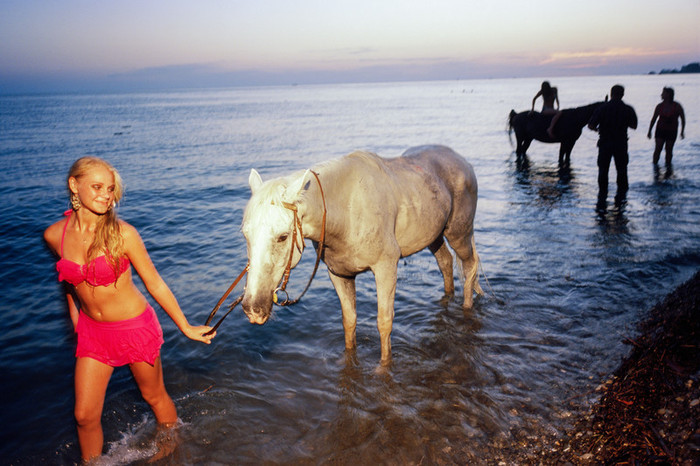
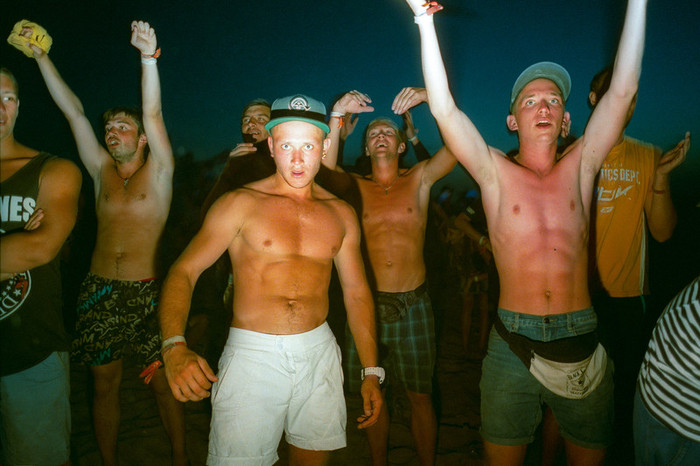
© Nikita ShokhovIt is August. The Moscow-Anapa economy class sleeping car is hot. Moms with men are everywhere. Quite a character is in the side seat: a deadlocked hippie girl. That’s a good sign! So, the Kubana Festival. A fence and the police battalion divide tens of thousands of rock fans into those who can pay the admission fee, and ordinary jerks. All the masses lie in the scorching sun for the whole day. The mayhem lasts from dusk till the morning. When the festival is over, several hundred hippies leave for Utrish, the cradle of freedom from social biases.
The Olympic Sochi is my next destination. The beach has not changed since the soviet times. The same bodies lying in the same attitudes consume the same boiled corn and warm their tender skin in the sun. Three weeks later they’ll go back to Central Russia, the Urals, or Siberia in the same sleeping car.
-Nikita Shokhov
Numerous amateur and professional photographers have focused on beach life, both in Soviet times and the new Russia. A. Slyusarev (Riga coast) and V. Tarnovetsky (Odessa) revisited memories of loneliness and the lack of facilities on beaches in the 80s, while Boris Mikhailov (Berdnyansk Beach series) took uncompromising seaside shots with a large number of both observed and staged scenes. Later on this subject matter was dominated by foreign photographers: the superb images of Sochi beaches by Carl de Keyzer published in the book U.S.S.R. Soviet Union; Martin Parr, etc.
After comparing photographs taken in a specific place over a lengthy passage of time, you reach the surprising conclusion that time apparently stands still and nothing has changed: the same bodies, jersey beachwear, hairstyles and faces. The popularity of this resort is particularly amazing, when it seemed Russians had already taken over the beaches of Turkey, Croatia, Spain, etc.
I hope that Nikita’s brief August trip along the sweltering seashore of our native land will be resumed and we can see more of his images, both in exhibitions and the media.
-Igor Mukhin
click to view the complete set of images in the archive