
Clouds Bring Blessings
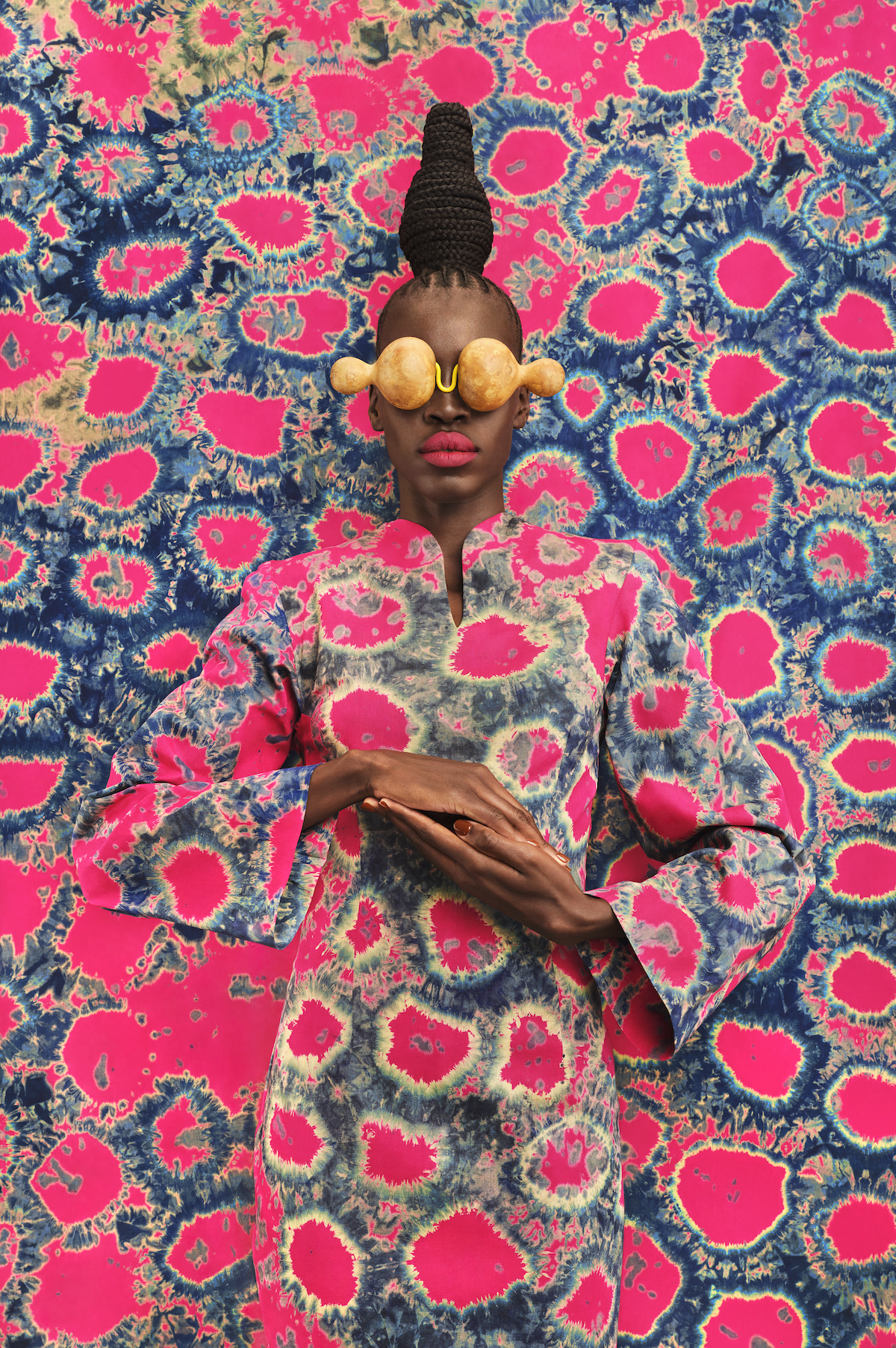
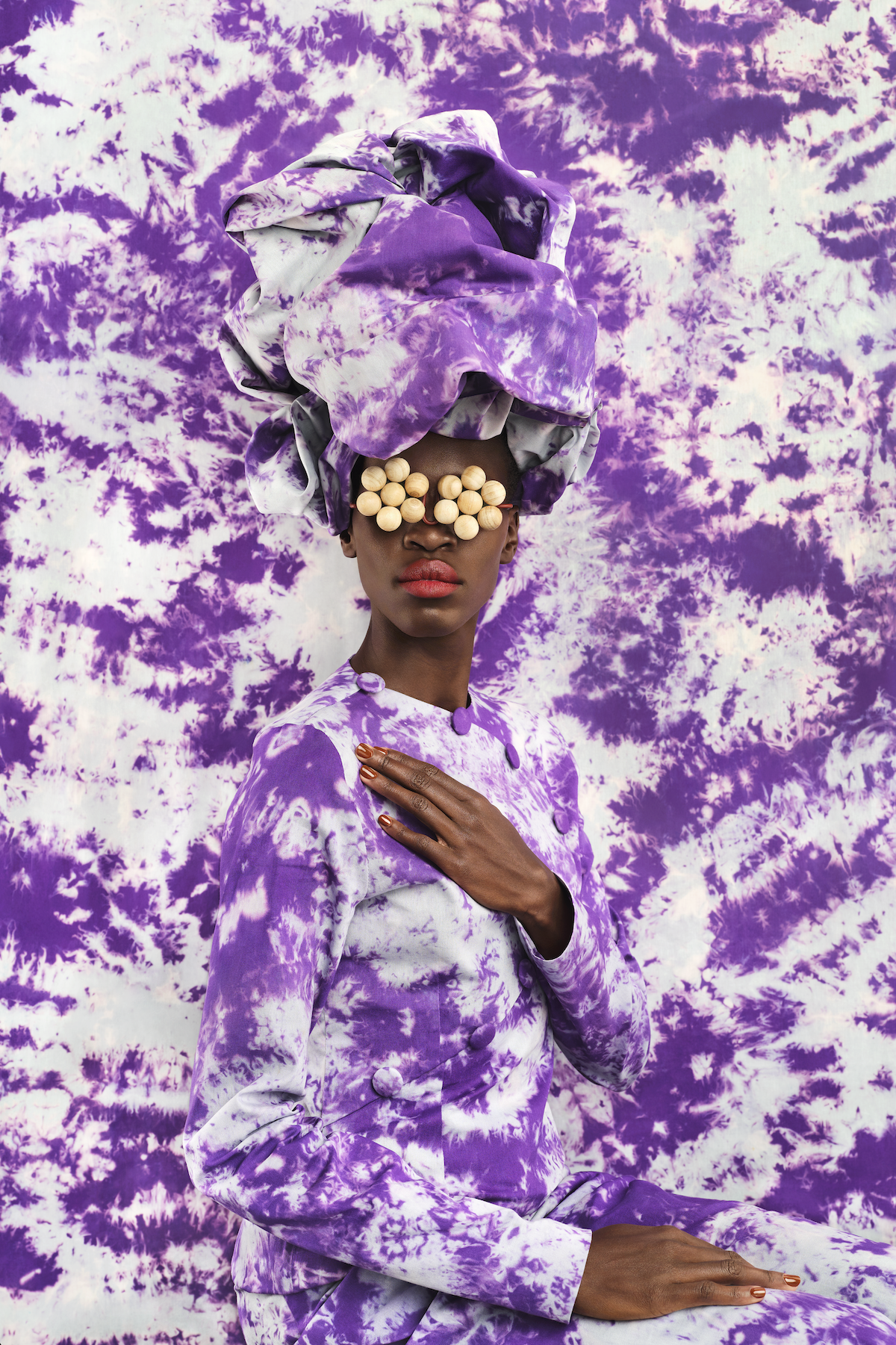
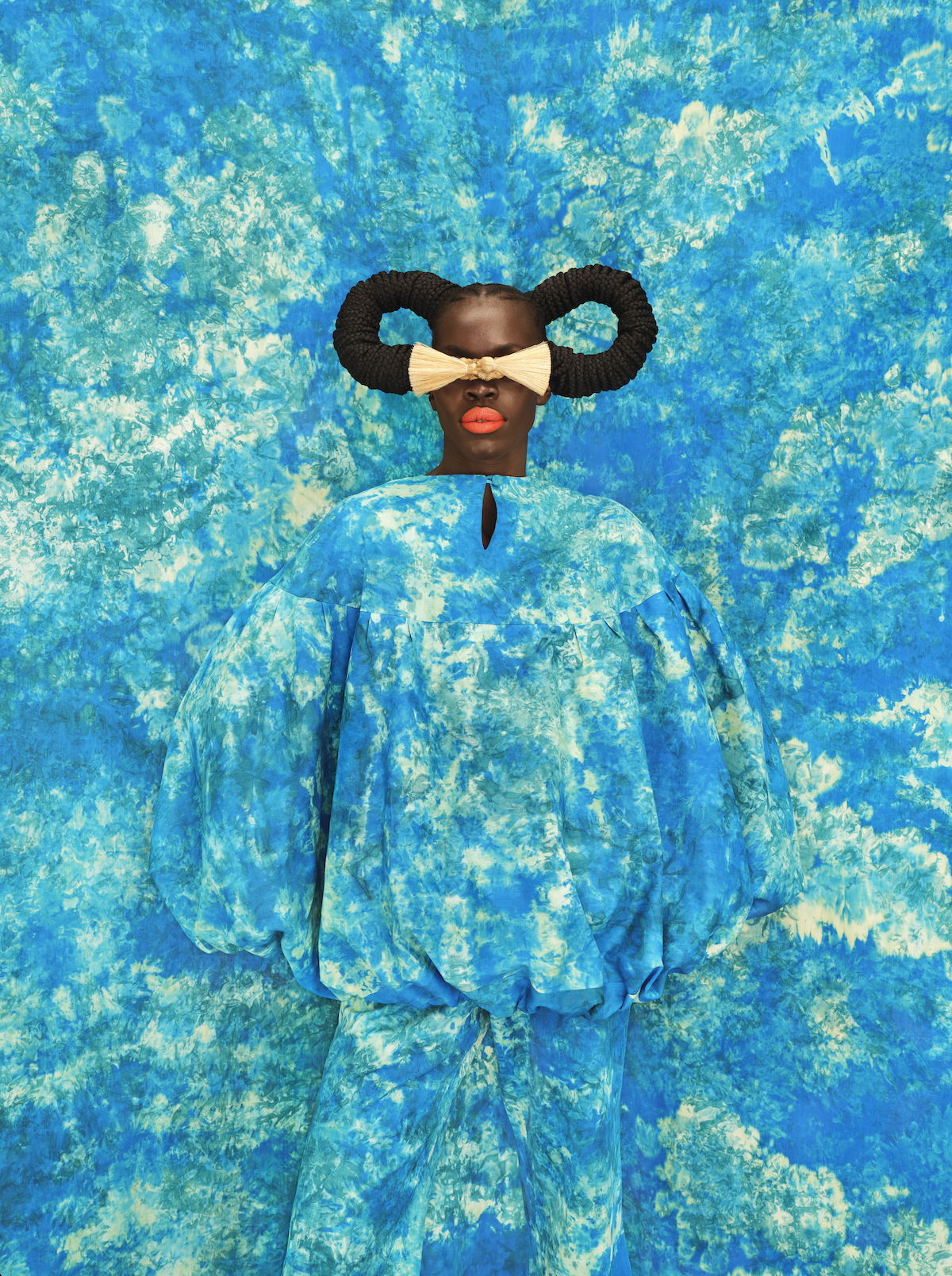
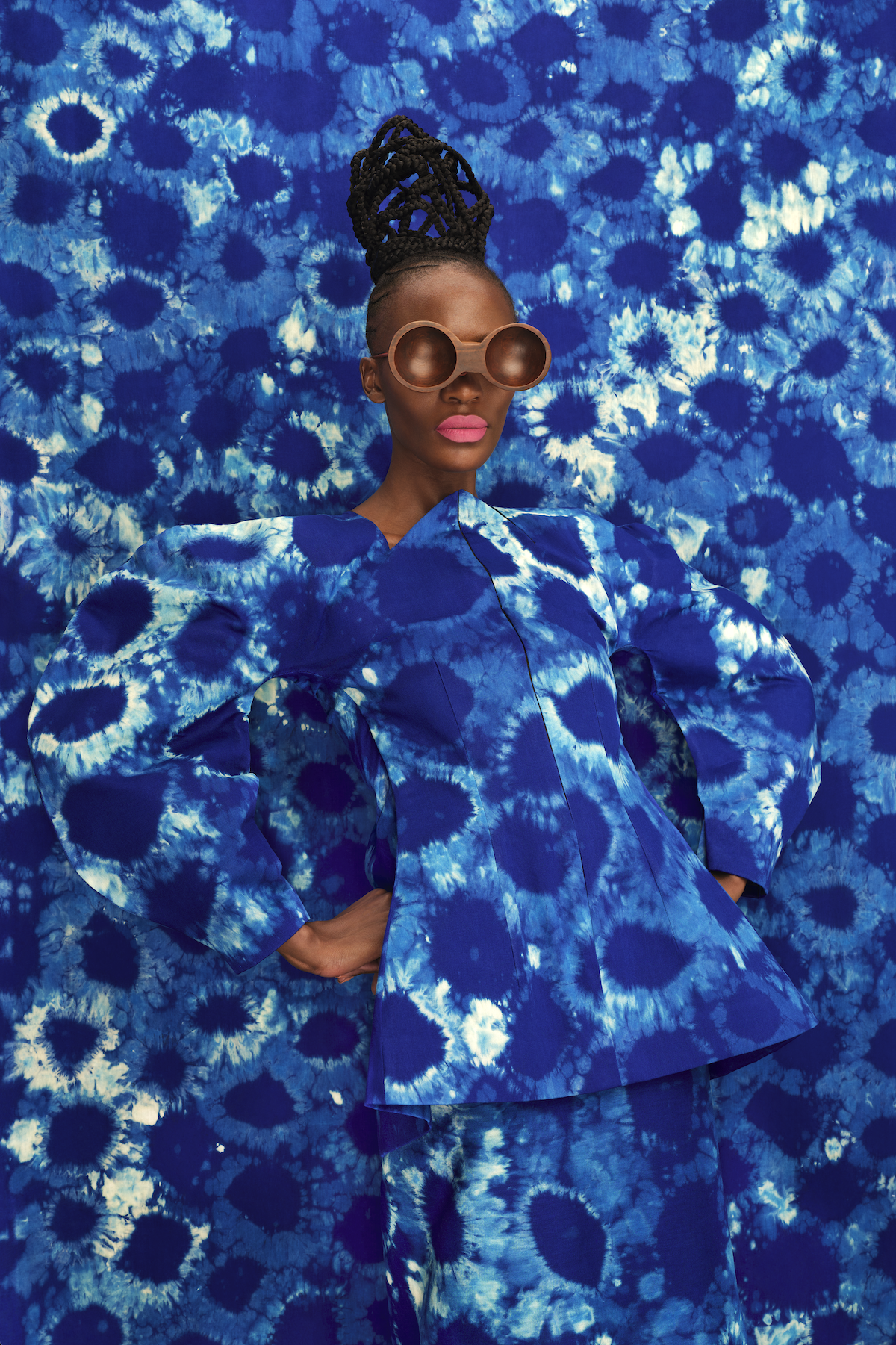
© Thandiwe MuriuClouds Bring Blessings unveils a new body of work in which the artist Thandiwe Muriu opens a dialogue with her natural environment and affirms her ongoing commitment to exploring cultural heritage. For these portraits, Muriu produced her own textiles using the tie & dye technique, embracing collaboration with nature, resistance, and surrender.
When Muriu first began experimenting with fabric-making, she imagined a dive into a technique- a study in both historical and contemporary craftsmanship. As she began to research how to create fabric, tie and dye seemed like a natural starting point. It was a textile that is often seen colourfully displayed along the long beaches of Kenya’s coastal region, Mombasa. Not complicated by difficult production techniques, or so she thought, the freedom and approachability of this method drew her in. Journeying deeper into the art of fabric-making, what was supposed to be a reconnection to traditional methodologies soon turned into a recognition of our longstanding dialogue with the environment.
This isn’t just a series about fabric. It is about impact; about the undeniable entanglement between what we make, and the world we make it in.
Where ancestral African craftsmanship is found, the earth is never far. Textiles made from tree bark, dyes drawn from fermented leaves, red ochre clay used as hair dye; the materials of our making have always come from a deep collaboration with nature. For Muriu, working with tie and dye was not a nostalgic return, but a yielding of process. As she entered this language of making, it became undeniably clear that the environment was not a theme but a co-creator. The more she tried to control the outcome of the dyeing process, the more the environment resisted.
Even with a formula in hand, the results shifted: the air, humidity, temperature; each left its mark on the fabric. In this work, Muriu is not the sole artist. She allowed the environment to speak, to alter, to intervene. She surrendered control.
Muriu did this research during a time of climatic chaos - Europe was burning, North America was flooding, and East Africa was unusually cold. Working in ‘The City Under The Sun’, Nairobi, the artist ironically battled dense cloud cover as she created her textiles. In today’s world, where survival is at stake, environmental consciousness has become a luxury, not a priority. We have severed our intimacy with nature. But still it persists. An artist completes their work; the environment never does. It is the unseen and uninvited co-author of every work of art. Over time, with quiet intervention, it continues to shape and speak. The most celebrated masterpieces in museums attest to this truth - the Louvre is filled with paintings that have gradually darkened, becoming versions their creators never intended or imagined.

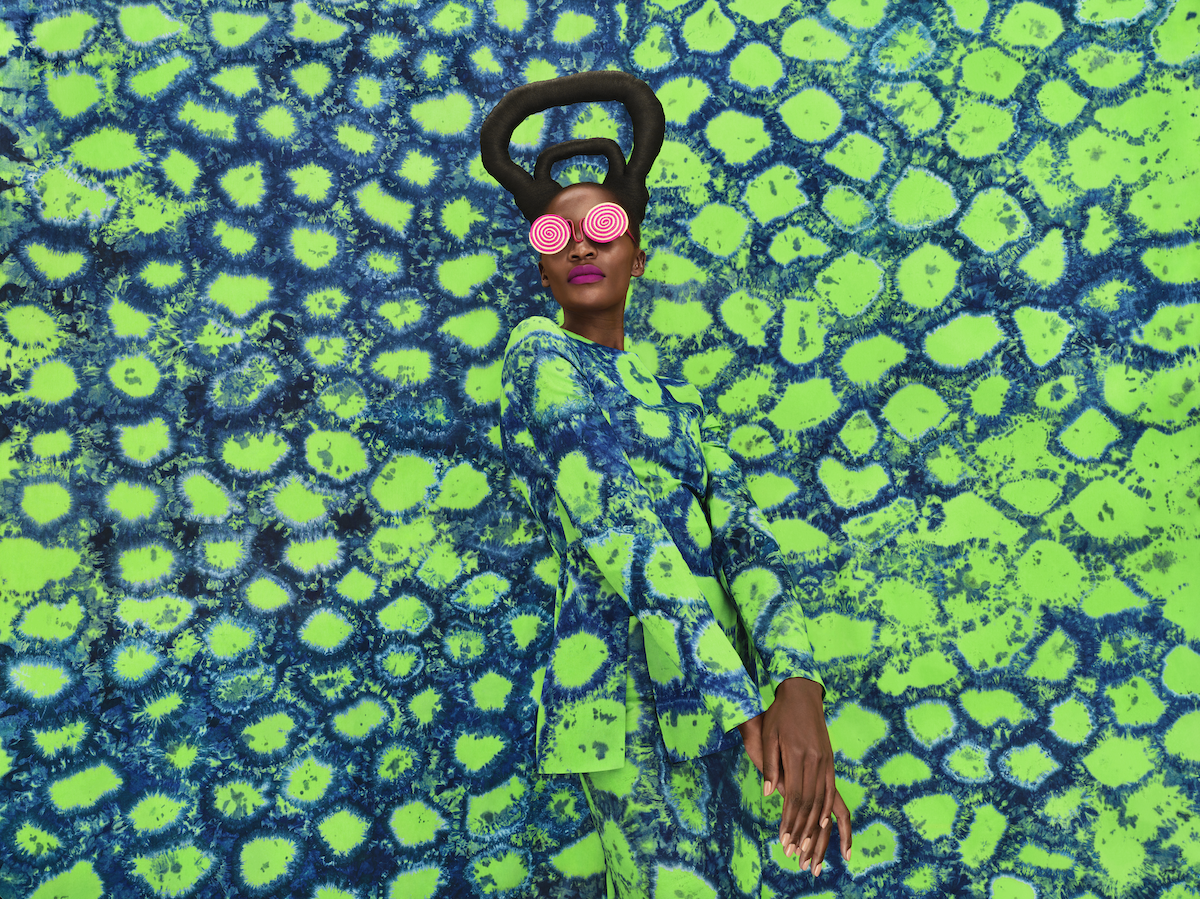
Today, tie and dye is not necessarily done with ingredients sourced from the earth, but the impact of climate on the result remains. Tie and dye is one of humanity’s oldest textile traditions - a gesture of colour and resistance that spans centuries and continents.
From the indigo pits of Kano in Nigeria to the intricate Shibori folds of Japan or the Bandhani dots of the Indus Valley, it is a technique developed in multiplicity, evolving through culture, necessity, and imagination.
Its fragmented but interlinked histories remind us that textile knowledge has no singular origin- just like identity, history, and the act of becoming. Its unpredictable nature, where the artist binds cloth with precision but relinquishes the outcome to the fluidity of liquid colour, echoes the mechanics of abstract art.
Tie and dye is a choreography between skilled hands, calculation, and time. The tying, twisting, and dipping of the fabric dyeing process brings to mind the deft manipulation involved in braiding hair. The language of textile making, where terminology like coarse and fine texture is used, is not far removed from that of hair. For the artist's canvas, the strands of her choosing were rough cotton for nostalgic reasons- many of the modern East African textiles known today have their origins in a coarse, white cotton cloth, holistically known as ‘Mericani‘- a direct reference to its place of origin, America. Much like the naming of the Mericani cloth and hairstyles in salons, patterns in tie and dye have highly localised names — Nadia, Corona, Samosa; each speaking about who or what circumstances surrounded their inception.
Africa’s history is written in her objects, and those objects point to her kinship with nature. What was made was deeply influenced by where its maker was. The adornments, architecture, and fabrics of Africa’s forefathers reflect this truth. Vessels, in particular, are long-standing continental artistic expressions of how Africans have transformed the natural elements available into beautiful forms.
Muriu drew from this source.
Shaping hair in the same way her ancestors shaped these materials, Akan clay pots and wooden Ekyanzi milking pots were carried by her subjects. In the creation process, through the motions of pulling, folding, and straightening, the artist began to discover not how to bend the environment to her will, but how to walk beside it. Through this journey, she was humbled into a newfound respect for the environment; a deep recognition that historically we had learnt nature’s lessons, then forgotten them.
For Muriu, the process of letting go became a way to remember. She named the images after memories; memories of moments where her heart beat in unison with the environment. Memories are locked to specific places, contexts, and environmental factors. This work is a journey of return. The environment, once Muriu’s combatant, slowly became her friend. Perhaps they only needed to reconcile.
”If you want to know the end, look at the beginning.”
African Proverb.
click to view the complete set of images in the archive


InstituteTM (collectively Institute Pictures, Institute Studios, & Institute Artist) is redefining how stories are produced and told in the 21st Century. Founded by Producer Frank Evers and Director/Visual Artist Lauren Greenfield, we are a multiplatform production company representing auteur-driven storytellers across commercials, photography, fine art, film, and technology — and producing original work across every screen that those stories live on. Our multiplatform expertise and established global relationships in entertainment, commercial, fine art, and journalism create unmatched reach and cross-pollination of creative work. A film commission informs a photography campaign; a fine art practice shapes a commercial; an editorial relationship opens a documentary. Few companies operate fluently across all of these worlds. Institute was built this way from the ground up.
Clients include: Apple, Google, Meta, Amazon, Microsoft/Xbox, LinkedIn, WhatsApp, Nike, Adidas, Lululemon, Under Armour, Dove, Maybelline, Clinique, Ulta Beauty, Aesop, Vaseline, LEGO, Balenciaga, Dior, Tom Ford, Kenzo, Supreme, Van Cleef & Arpels, Mercedes-Benz, Volvo, Toyota, McLaren, Pennzoil, American Express, Chase, U.S. Bank, Burger King, Chobani, Corona, Pepsi, Nespresso, Lavazza, Velveeta, Airbnb, Four Seasons, Marriott, Instacart, eBay, JCPenney, Levi's, Swatch, Bang & Olufsen, Bayer, Pfizer, Genentech, EA, Planned Parenthood, Ad Council, and the United Nations. Editorial and publishing partners include: The New York Times Magazine, The New Yorker, GQ, Esquire, TIME, Bloomberg, National Geographic, The Economist, Monocle, Le Monde, Stern, Sunday Times Magazine, Phaidon, Steidl, Abrams, Prestel, Chronicle, and Random House.
“Institute” is a registered trademark in the US, Europe, and United Kingdom. All rights reserved.