
Flaming Motors
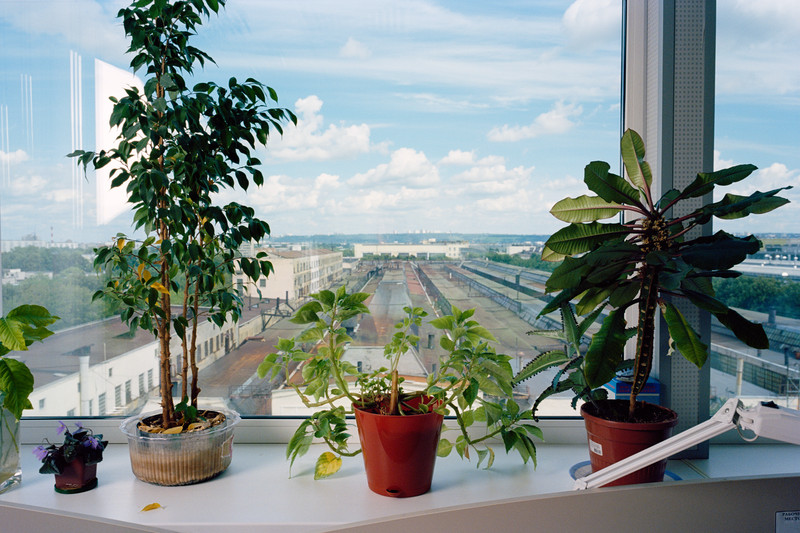
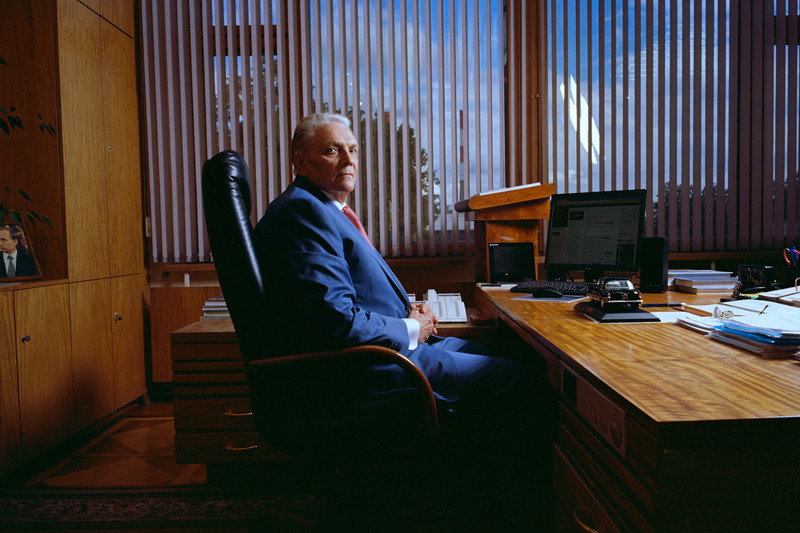
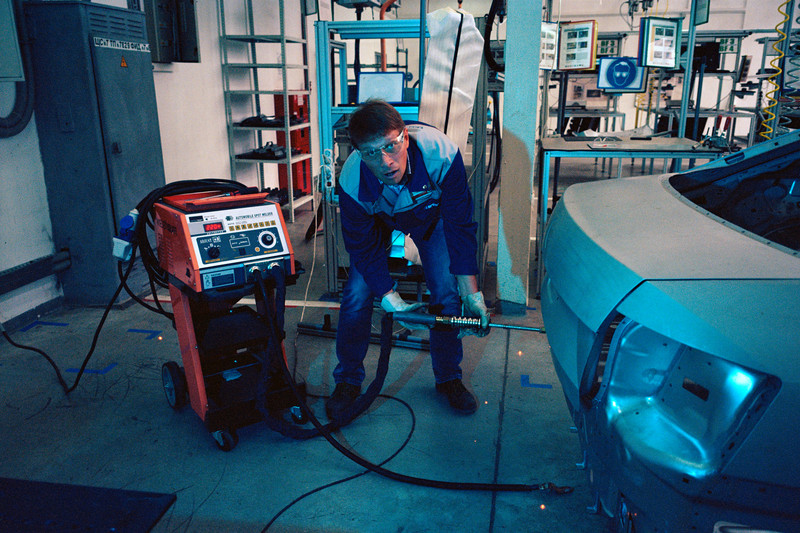
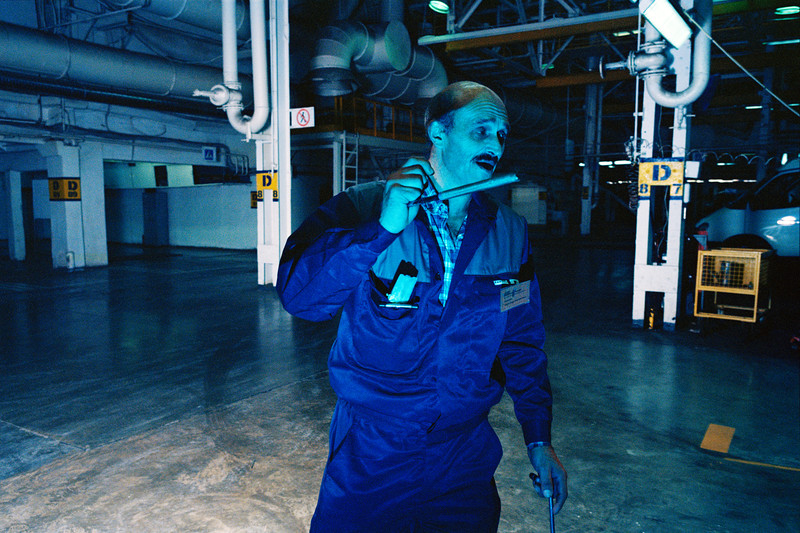
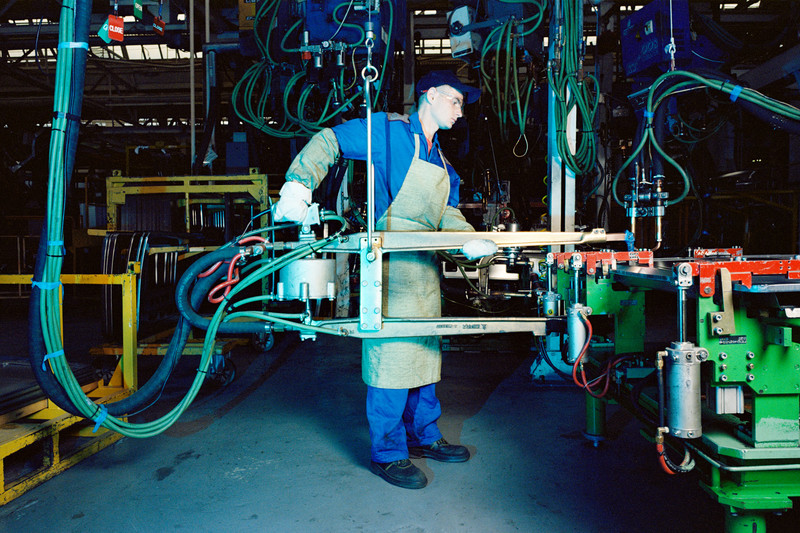
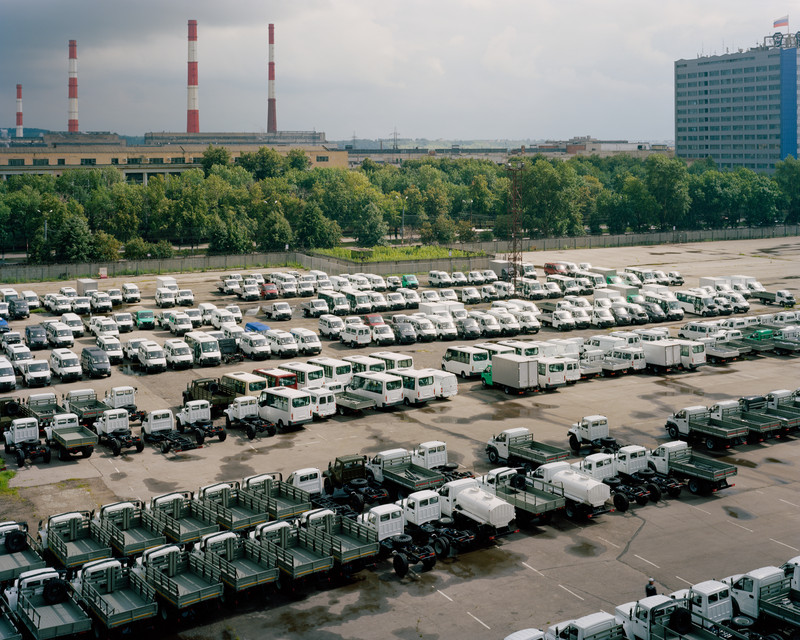
© Nikita ShokhovThe series Flaming Motors is created at the oldest Russian automobile plant: the Gorky Automobile Plant in the city of Nizhny Novgorod. The photographs reflect its history and today's time. The GAZ plant was built with the assistance of the U.S. Ford Company in 1932.
In those times, the USSR the new industrial cities were supposed to become the driving force of the industrial as well as cultural development. Since new plants were often built by GULAG prisoners, they symbolized the start of the new life and belief in a better future. New Soviet plants were called "flaming motors" of the new industrial Soviet world. After the Soviet Union breakdown the GAZ plant was in depression but currently, it produces GAZ trucks as well cars and vans by Volkswagen, Skoda, and Mercedes-Benz.
The series shows industrial life through the prism of human-robots interaction. The workers as sculptures and machines as alive creatures. The photographs discover some disadvantages of the aesthetic and social environment of the workers. Initially, the equipment and buildings were created for functional reasons without consideration of industrial aesthetics. However, a new romantic charm appeared in the process of industrial rise. The kind, somehow rude and very tough beauty of industrial buildings, areas, and entire cities captures an eye today. We can look at places and people whose personality is perhaps too often stay behind the manufactured products. On some of the photographs, the artist himself shows up among groups of workers.
click to view the complete set of images in the archive







InstituteTM (collectively Institute Pictures, Institute Studios, & Institute Artist) is redefining how stories are produced and told in the 21st Century. Founded by Producer Frank Evers and Director/Visual Artist Lauren Greenfield, we are a multiplatform production company representing auteur-driven storytellers across commercials, photography, fine art, film, and technology — and producing original work across every screen that those stories live on. Our multiplatform expertise and established global relationships in entertainment, commercial, fine art, and journalism create unmatched reach and cross-pollination of creative work. A film commission informs a photography campaign; a fine art practice shapes a commercial; an editorial relationship opens a documentary. Few companies operate fluently across all of these worlds. Institute was built this way from the ground up.
Clients include: Apple, Google, Meta, Amazon, Microsoft/Xbox, LinkedIn, WhatsApp, Nike, Adidas, Lululemon, Under Armour, Dove, Maybelline, Clinique, Ulta Beauty, Aesop, Vaseline, LEGO, Balenciaga, Dior, Tom Ford, Kenzo, Supreme, Van Cleef & Arpels, Mercedes-Benz, Volvo, Toyota, McLaren, Pennzoil, American Express, Chase, U.S. Bank, Burger King, Chobani, Corona, Pepsi, Nespresso, Lavazza, Velveeta, Airbnb, Four Seasons, Marriott, Instacart, eBay, JCPenney, Levi's, Swatch, Bang & Olufsen, Bayer, Pfizer, Genentech, EA, Planned Parenthood, Ad Council, and the United Nations. Editorial and publishing partners include: The New York Times Magazine, The New Yorker, GQ, Esquire, TIME, Bloomberg, National Geographic, The Economist, Monocle, Le Monde, Stern, Sunday Times Magazine, Phaidon, Steidl, Abrams, Prestel, Chronicle, and Random House.
“Institute” is a registered trademark in the US, Europe, and United Kingdom. All rights reserved.