
Forty years under the veil
© Nuria López TorresIran
The political model originated by the Islamic Revolution that was declared victorious in 1979 has been a unique experiment in the world in which religion, in this case Shiite Islam, has sought to mold a society of eighty million inhabitants under the aesthetic, ideological and behavioral canons professed by its leaders. All men and most of them older.
The male, patriarchal and religious vision has influenced women's lives and their relationship with their bodies, their sexuality and their feelings.
Women's big or small battles for their rights have become one of the most hated enemies of the Islamic Republic.
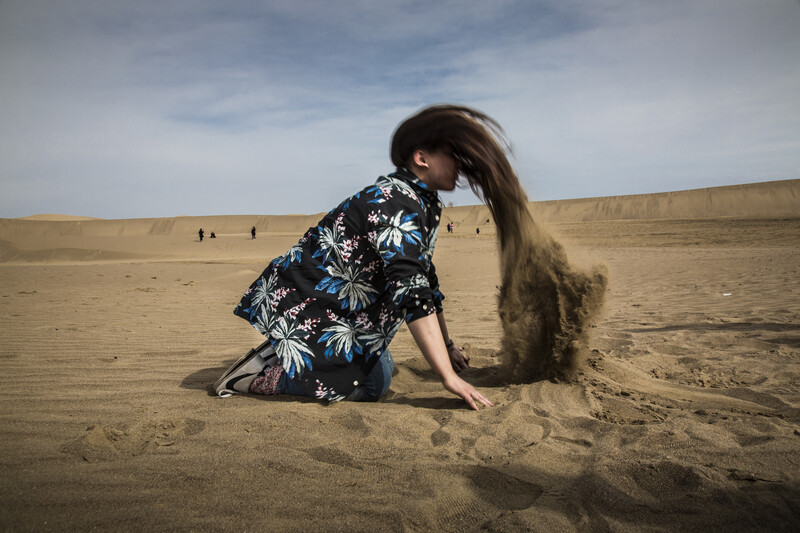
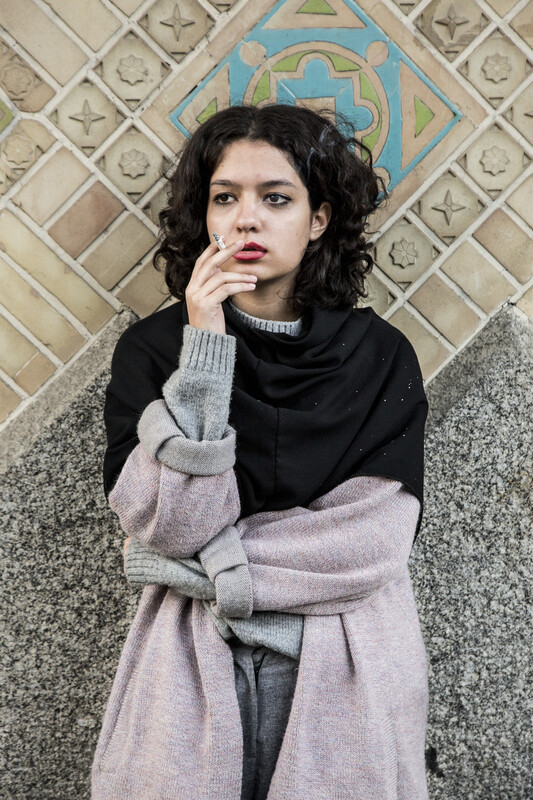
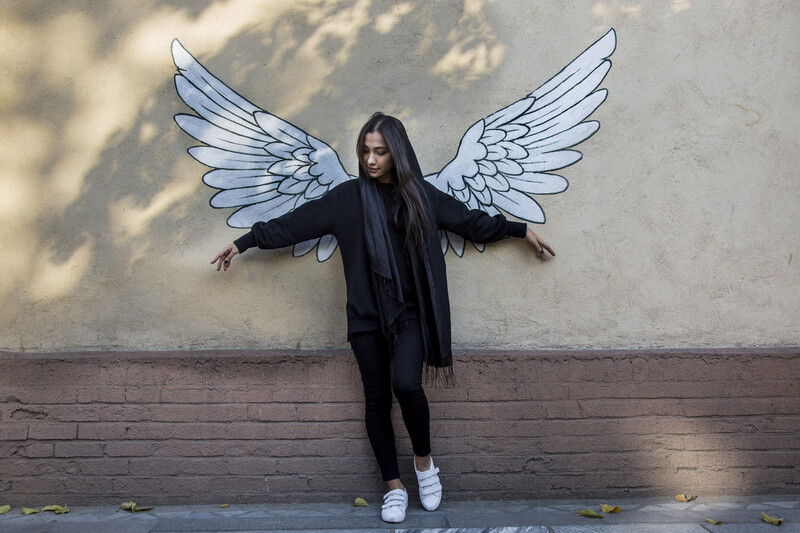
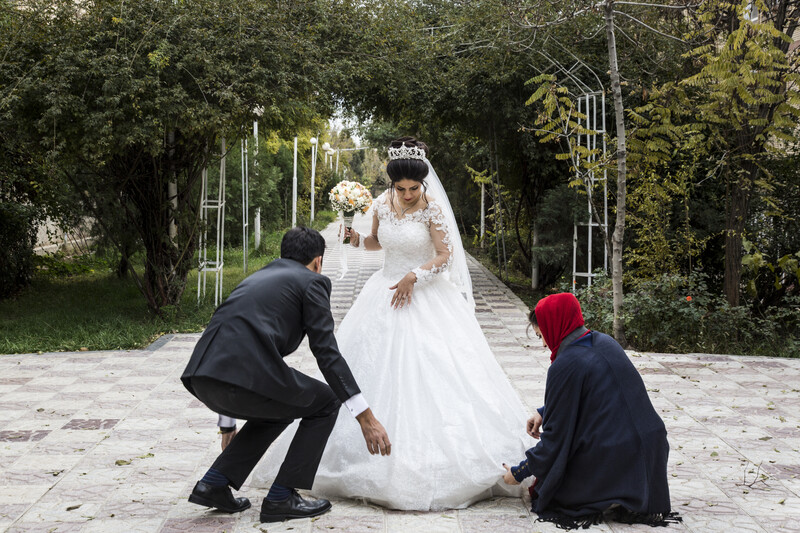
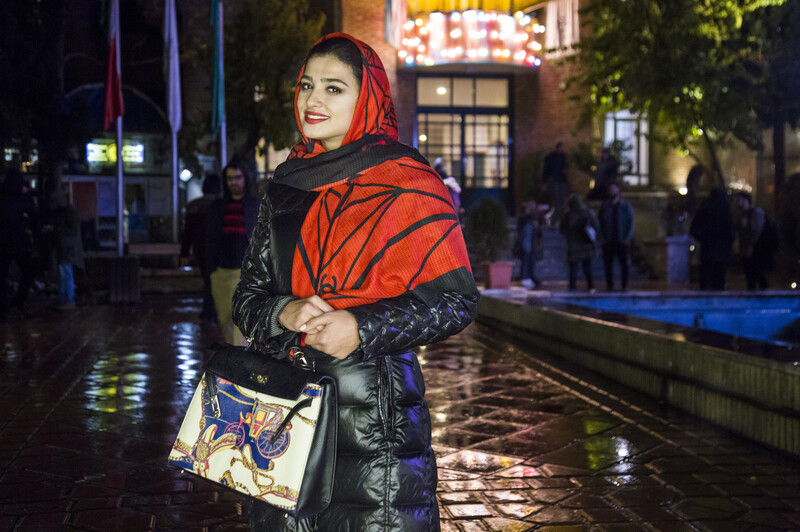
In recent years, more and more women in Iran defy the strict rules of Islamic dress, and turn the veil that must cover their hair into a weapon to demand rights and freedoms. The way they dress is also another battleground for the Islamic authorities. A large number of women have stopped covering their bodies with the chador (a black dress that completely covers their bodies), to wear a garment where the shapes of their bodies are more visible.
Iranian women try to find psychological and physical spaces of freedom that allow them to overcome the pressure of a society that oppresses their rights, and that exerts great pressure and repression on their bodies.
Many women seek to move away from the big cities when they can to find spaces of freedom, whether in the mountains of Tehran, in rural areas or in natural spaces such as the desert itself, where the control of the morality police is less, and they feel freer to express themselves and relate to men. Any kind of public affectionate relationship between a man and a woman is grounds for arrest by the morality police.
The economic crisis and the pandemic have tightened the government's control over the population, especially women. New generations of women do not want to take a step back and are demanding greater rights and freedoms.
click to view the complete set of images in the archive


InstituteTM (collectively Institute Pictures, Institute Studios, & Institute Artist) is redefining how stories are produced and told in the 21st Century. Founded by Producer Frank Evers and Director/Visual Artist Lauren Greenfield, we are a multiplatform production company representing auteur-driven storytellers across commercials, photography, fine art, film, and technology — and producing original work across every screen that those stories live on. Our multiplatform expertise and established global relationships in entertainment, commercial, fine art, and journalism create unmatched reach and cross-pollination of creative work. A film commission informs a photography campaign; a fine art practice shapes a commercial; an editorial relationship opens a documentary. Few companies operate fluently across all of these worlds. Institute was built this way from the ground up.
Clients include: Apple, Google, Meta, Amazon, Microsoft/Xbox, LinkedIn, WhatsApp, Nike, Adidas, Lululemon, Under Armour, Dove, Maybelline, Clinique, Ulta Beauty, Aesop, Vaseline, LEGO, Balenciaga, Dior, Tom Ford, Kenzo, Supreme, Van Cleef & Arpels, Mercedes-Benz, Volvo, Toyota, McLaren, Pennzoil, American Express, Chase, U.S. Bank, Burger King, Chobani, Corona, Pepsi, Nespresso, Lavazza, Velveeta, Airbnb, Four Seasons, Marriott, Instacart, eBay, JCPenney, Levi's, Swatch, Bang & Olufsen, Bayer, Pfizer, Genentech, EA, Planned Parenthood, Ad Council, and the United Nations. Editorial and publishing partners include: The New York Times Magazine, The New Yorker, GQ, Esquire, TIME, Bloomberg, National Geographic, The Economist, Monocle, Le Monde, Stern, Sunday Times Magazine, Phaidon, Steidl, Abrams, Prestel, Chronicle, and Random House.
“Institute” is a registered trademark in the US, Europe, and United Kingdom. All rights reserved.