
 Sex and Dying in High Society: A Lauren Greenfield Retrospective
by Ryan Saylor
The Annenberg Space for Photography is located in Century City, a nest of skyscrapers that are home to Los Angeles's most powerful entertainment lawyers, which makes it the perfect venue for Lauren Greenfield's career-spanning survey "Generation Wealth," an exhibition on view through August 13 that gives the pursuits of riches, fame, and eternal beauty their due as the epic sagas of our time.
Greenfield, a photographer and documentary filmmaker, was born in 1966, and grew up in LA around the culture of affluence that became her lifelong subject. For her first photographic assignment, she documented the Zinacanteco people of Chiapas for National Geographic. She brought the same anthropological angle to LA youth culture in her first monograph, Fast Forward: Growing Up in the Shadow of Hollywood (1997). Greenfield went on to build a significant photojournalism portfolio, and also worked in fashion editorial and advertising. In 2006 she directed Thin, a documentary on girls and body image, for HBO, and released an accompanying book of photographs.
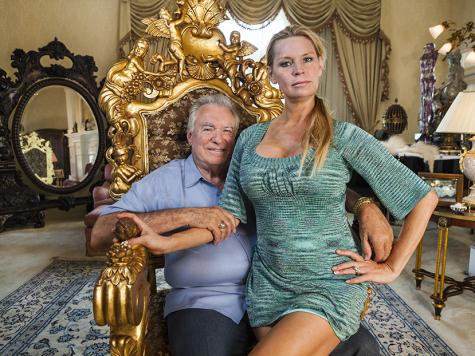
Today Greenfield may be best known for The Queen of Versailles, for which she won a directing award at the 2012 Sundance Film Festival. The documentary drops us into the lives of time-share tycoon David Siegel and his wife Jackie as his business collapses in 2008's stock market crash, ruining their sublimely crass fantasy homebuilding project, which is modeled partly on the Palace of Versailles. It's a small masterpiece of tragicomedy. David tries to put a good face on things while Jackie, a shopping addict, proves incapable of adjusting to their straitened circumstances. (Since filming, Siegel's industry has taken off again and the couple's dream home is back on track.)
The exhibition is engaging, illuminating, and totally fun, if perhaps overly wordy. It starts with some lengthy wall texts glossing themes like economic inequality and environmental degradation—topics that are revisited by historians and cultural critics in wall texts throughout, in addition to captions explaining who is in each image and what they are doing. Still, there's plenty to ogle: models, celebs, strip clubs, teen fantasias, and billionaire gaucherie. Greenfield's background in fashion editorial and infectious sense of spectacle lend many of her images a dreamy, candy-like texture. There's also an ominous feeling undercutting the pervasive opulence of the works on view. But like the goods and experiences they show, Greenfield's images are a pleasure to consume. The people on view here are shot with compassion, even if they are too rich, too clueless, and too spectacular to be relatable.
In addition to the photographs, hung in rows of three or four, there are several video monitors with headphones showing clips, and screening areas featuring videos up to thirty minutes long. Wealth Project (2017), an introductory documentary playing in a theater near the museum entrance, depicts a cast of sympathetic characters representative who experienced hardship after the 2008 crash. Greenfield appears in front of the camera, sifting through her archives and explaining how her long obsession with glamour, excess, and inequality came into focus for her as a life project during this period. Documentary lends itself to cliché, and there are some slack ones here. Subtitles label a woman named Ilona as "Wife of Russian Oligarch," and she fits the role to a T: a willowy, watery-blonde former model, bored with her sequestration in a gilded cage. It's as if she cast herself.....Read the rest of the article artinamericamagazine.com.
Check out the feature: Generation Wealth