
Mistresspieces
© Dina GoldsteinThroughout art history, male painters have often used the female form as a central subject, frequently portraying women as symbols of beauty, fertility, sensuality, and sometimes as allegories of nature, virtue, or vice. In many classical traditions, the female body was idealized, emphasizing graceful lines, soft curves, and proportion, as seen in works by artists like Titian and Botticelli. During the Renaissance, the depiction of the female nude became a way to explore humanist ideals and the mastery of anatomy, though these representations often reflected the male gaze, framing women as objects of desire rather than autonomous individuals. In later periods, such as the Romantic and Impressionist movements, female subjects continued to be portrayed, but with varying degrees of emotional depth, realism, or abstraction. In the 20th century, particularly within the Pop Art movement, male artists further explored the female form, often reducing it to stylized, commodified images that reflected consumer culture and mass media’s portrayal of women, emphasizing the tension between art, objectification, and the commercialization of the female body. While some male artists celebrated the female form with reverence or empathy, others objectified or fetishized it, contributing to ongoing debates about gender, power dynamics, and the portrayal of women in art.
click to view the complete set of images in the archive
Mona Lisa
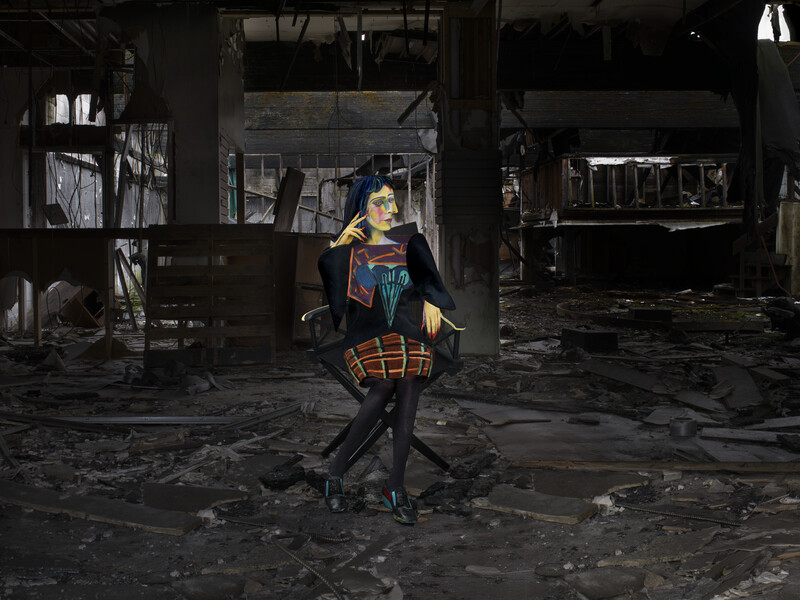
Leonardo da Vinci began painting the Mona Lisa about 1503, and it was in his studio when he died in 1519. He likely worked on it intermittently over several years. The Mona Lisa was originally a type of portrait, but over time its meaning has shifted, and it has become an icon of the Renaissance, perhaps the most recognized painting in the world. The Mona Lisa is a likely a portrait of the wife of a Florentine merchant. For some reason however, the portrait was never delivered to its patron, and Leonardo kept it with him when he went to work for the King of France. The portrait depicts a woman who is widely believed to be the wife of a Florentine merchant La Gioconda. The subject's softly sculptural face shows Leonardo's skillful handling of sfumato, an artistic technique that uses gradations of light and shadow to model form, and shows his understanding of anatomy.
The simple Florentine housewife who may have been portrayed was transformed into a mysterious seductress. Viewers today can appreciate her equivocal expression, the sitter’s steady gaze and restrained smile. I have placed this elegant figure on the streets of the Downtown Eastside (DTES) known as the site of a complex set of social issues, including disproportionately high levels of drug use, homelessness, poverty, crime, mental illness and sex work. It is also known for its strong community resilience, history of social activism, and artistic contributions.
![]()
Leonardo da Vinci began painting the Mona Lisa about 1503, and it was in his studio when he died in 1519. He likely worked on it intermittently over several years. The Mona Lisa was originally a type of portrait, but over time its meaning has shifted, and it has become an icon of the Renaissance, perhaps the most recognized painting in the world. The Mona Lisa is a likely a portrait of the wife of a Florentine merchant. For some reason however, the portrait was never delivered to its patron, and Leonardo kept it with him when he went to work for the King of France. The portrait depicts a woman who is widely believed to be the wife of a Florentine merchant La Gioconda. The subject's softly sculptural face shows Leonardo's skillful handling of sfumato, an artistic technique that uses gradations of light and shadow to model form, and shows his understanding of anatomy.
The simple Florentine housewife who may have been portrayed was transformed into a mysterious seductress. Viewers today can appreciate her equivocal expression, the sitter’s steady gaze and restrained smile. I have placed this elegant figure on the streets of the Downtown Eastside (DTES) known as the site of a complex set of social issues, including disproportionately high levels of drug use, homelessness, poverty, crime, mental illness and sex work. It is also known for its strong community resilience, history of social activism, and artistic contributions.

Girl With Pearl Earring
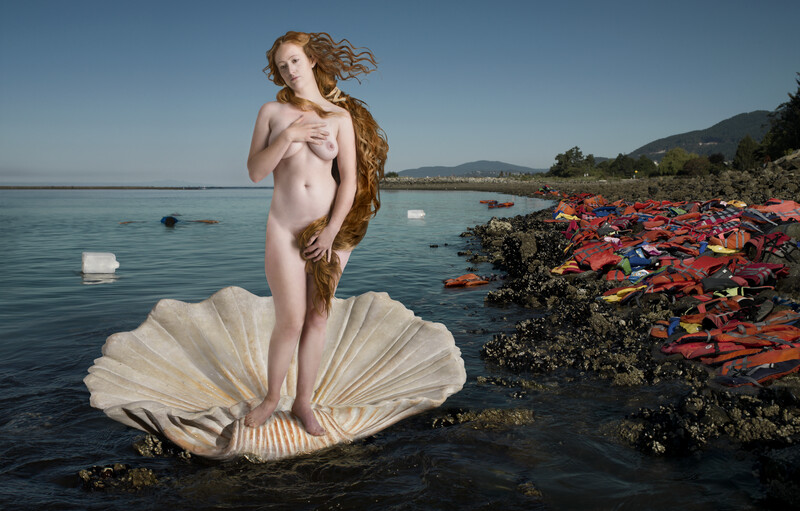
The subject of the painting is unknown, with it either being possible that she was a real model, or that Vermeer created a more generalized and mysterious woman, perhaps representing a biblical figure. There has been speculation that she is the artist's eldest daughter, Maria, though this has been dismissed as an anachronism by some art historians. Unlike many of Vermeer’s subjects, she is not concentrating on a daily chore and unaware of her viewer. Instead, caught in a fleeting moment, she turns her head over her shoulder, meeting the viewer’s gaze with her eyes wide and lips parted as if about to speak. The dramatic, chiaroscuro lighting is one of the most striking and enduring aspects of Vermeer’s Girl with a Pearl Earring.
The almost black backdrop becomes the ideal setting for his young woman, who stands out like a spot lit actor on a stage. In this tableaux she is placed on a beach riddled with plastic waste. At least 14 million tons of plastic end up in the ocean every year. Plastic debris is currently the most abundant type of litter in the ocean, making up 80% of all marine debris found from surface waters to deep-sea sediments. Plastic is found on the shorelines of every continent, with more plastic waste found near popular tourist destinations and densely populated areas. The main sources of plastic debris found in the ocean are land-based, coming from urban and stormwater runoff, sewer overflows, littering, inadequate waste disposal and management, industrial activities, tires, construction and illegal dumping. Plastic pollution in the ocean has a devastating impact on marine life and ecosystems. The most worrying one being the damage plastic items cause to animals when they come into contact with or ingest them, which include suffocation, entanglement, laceration, infections and internal injuries.
![]()
The subject of the painting is unknown, with it either being possible that she was a real model, or that Vermeer created a more generalized and mysterious woman, perhaps representing a biblical figure. There has been speculation that she is the artist's eldest daughter, Maria, though this has been dismissed as an anachronism by some art historians. Unlike many of Vermeer’s subjects, she is not concentrating on a daily chore and unaware of her viewer. Instead, caught in a fleeting moment, she turns her head over her shoulder, meeting the viewer’s gaze with her eyes wide and lips parted as if about to speak. The dramatic, chiaroscuro lighting is one of the most striking and enduring aspects of Vermeer’s Girl with a Pearl Earring.
The almost black backdrop becomes the ideal setting for his young woman, who stands out like a spot lit actor on a stage. In this tableaux she is placed on a beach riddled with plastic waste. At least 14 million tons of plastic end up in the ocean every year. Plastic debris is currently the most abundant type of litter in the ocean, making up 80% of all marine debris found from surface waters to deep-sea sediments. Plastic is found on the shorelines of every continent, with more plastic waste found near popular tourist destinations and densely populated areas. The main sources of plastic debris found in the ocean are land-based, coming from urban and stormwater runoff, sewer overflows, littering, inadequate waste disposal and management, industrial activities, tires, construction and illegal dumping. Plastic pollution in the ocean has a devastating impact on marine life and ecosystems. The most worrying one being the damage plastic items cause to animals when they come into contact with or ingest them, which include suffocation, entanglement, laceration, infections and internal injuries.



Madame X
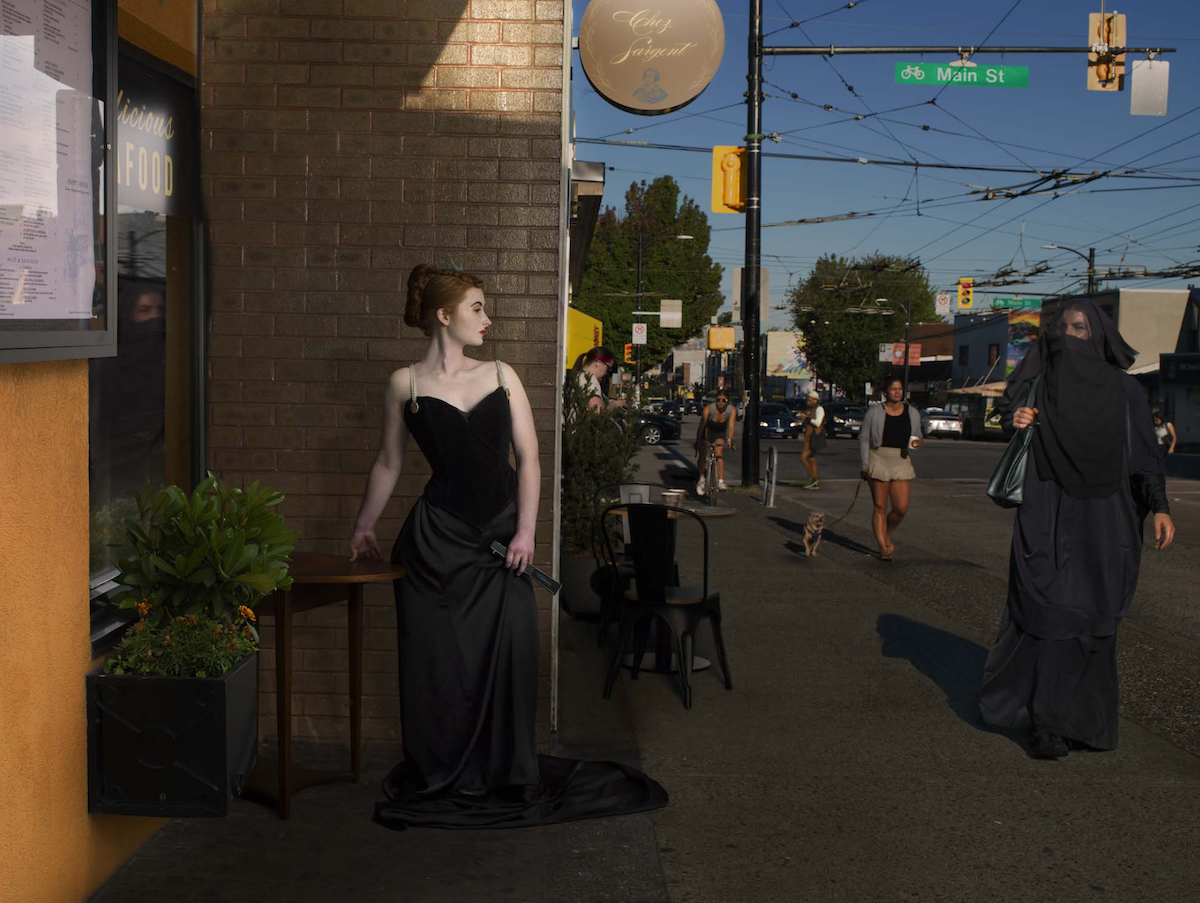
John Singer Sargent’s 1884 portrait Madame X caused a scandal when first exhibited in Paris, not for its divine craftsmanship, but for its daring to expose a woman’s complete bare shoulder. The model’s dress strap was seen as shockingly suggestive, provoking such an uproar that Sargent repainted the strap in place and eventually left Paris for London to rebuild his career. Virginie Amélie Avegno Gautreau, a wealthy American-born socialite known in Paris for her striking beauty and pale complexion, longed to be immortalized as a great beauty. Instead, the painting brought her notoriety and damaged her reputation in society. Today within Western culture women have freedoms that make Singer Sargent dilemma a non-issue. However despite feminist achievements and the change of norms, the desire to cover up women continues. In many cases women remain covered by burkas not out of free choice, but due to restrictions imposed by patriarchal and misogynistic religious traditions. This in stark contrast to the freedoms and self-expression of modern Western society.
![]()
John Singer Sargent’s 1884 portrait Madame X caused a scandal when first exhibited in Paris, not for its divine craftsmanship, but for its daring to expose a woman’s complete bare shoulder. The model’s dress strap was seen as shockingly suggestive, provoking such an uproar that Sargent repainted the strap in place and eventually left Paris for London to rebuild his career. Virginie Amélie Avegno Gautreau, a wealthy American-born socialite known in Paris for her striking beauty and pale complexion, longed to be immortalized as a great beauty. Instead, the painting brought her notoriety and damaged her reputation in society. Today within Western culture women have freedoms that make Singer Sargent dilemma a non-issue. However despite feminist achievements and the change of norms, the desire to cover up women continues. In many cases women remain covered by burkas not out of free choice, but due to restrictions imposed by patriarchal and misogynistic religious traditions. This in stark contrast to the freedoms and self-expression of modern Western society.
Adele Bloch-Bauer
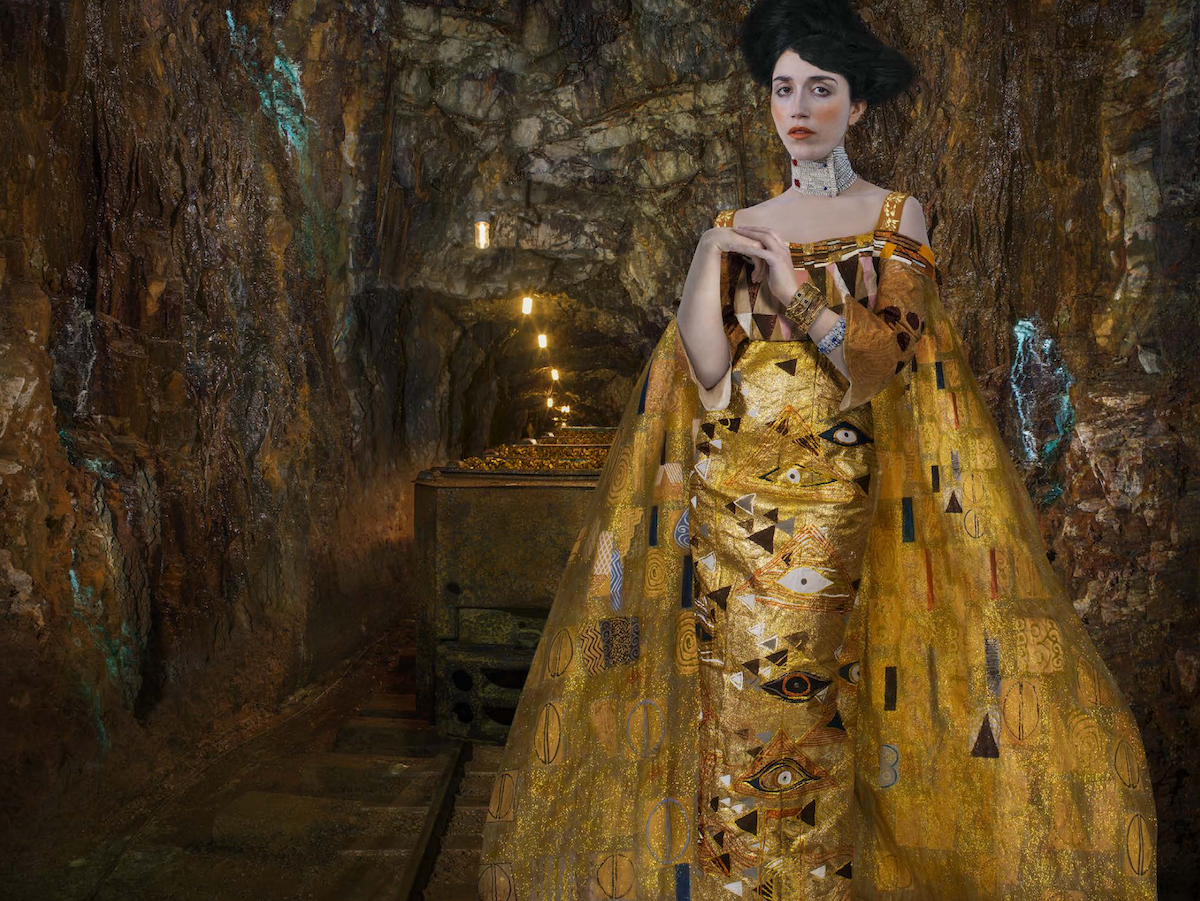
Gustav Klimt’s Portrait of Adele Bloch-Bauer I (1907), often called the “Woman in Gold,” is an example of his Golden Phase, where oil paint and gold leaf merge into a jewel-like surface. Adele Bloch-Bauer was a wealthy Viennese socialite and patron of the arts, best known as the muse for Gustav Klimt. The portrait embodies both sensuality and opulence, elevating Adele into an icon. Adele stands within a gold mine that bears gold, an element that humanity has valued and treasured throughout history. For thousands of years, humanity has cherished gold for its rarity, beauty, and resistance to tarnish, weaving it into symbols of power, divinity, and wealth. From ancient burial masks to modern financial systems, gold has remained a universal marker of value and prestige across civilizations. Sadly, irresponsible mining, and large-scale excavation disrupt ecosystems by stripping
away forests, contaminating water sources with toxic runoff, and leaving behind scarred landscapes. These practices contribute to soil erosion, loss of biodiversity, and long-term damage that can take centuries to heal.
![]()
Gustav Klimt’s Portrait of Adele Bloch-Bauer I (1907), often called the “Woman in Gold,” is an example of his Golden Phase, where oil paint and gold leaf merge into a jewel-like surface. Adele Bloch-Bauer was a wealthy Viennese socialite and patron of the arts, best known as the muse for Gustav Klimt. The portrait embodies both sensuality and opulence, elevating Adele into an icon. Adele stands within a gold mine that bears gold, an element that humanity has valued and treasured throughout history. For thousands of years, humanity has cherished gold for its rarity, beauty, and resistance to tarnish, weaving it into symbols of power, divinity, and wealth. From ancient burial masks to modern financial systems, gold has remained a universal marker of value and prestige across civilizations. Sadly, irresponsible mining, and large-scale excavation disrupt ecosystems by stripping
away forests, contaminating water sources with toxic runoff, and leaving behind scarred landscapes. These practices contribute to soil erosion, loss of biodiversity, and long-term damage that can take centuries to heal.

InstituteTM (collectively Institute Pictures, Institute Studios, & Institute Artist) is redefining how stories are produced and told in the 21st Century. Founded by Producer Frank Evers and Director/Visual Artist Lauren Greenfield, we are a multiplatform production company representing auteur-driven storytellers across commercials, photography, fine art, film, and technology — and producing original work across every screen that those stories live on. Our multiplatform expertise and established global relationships in entertainment, commercial, fine art, and journalism create unmatched reach and cross-pollination of creative work. A film commission informs a photography campaign; a fine art practice shapes a commercial; an editorial relationship opens a documentary. Few companies operate fluently across all of these worlds. Institute was built this way from the ground up.
Clients include: Apple, Google, Meta, Amazon, Microsoft/Xbox, LinkedIn, WhatsApp, Nike, Adidas, Lululemon, Under Armour, Dove, Maybelline, Clinique, Ulta Beauty, Aesop, Vaseline, LEGO, Balenciaga, Dior, Tom Ford, Kenzo, Supreme, Van Cleef & Arpels, Mercedes-Benz, Volvo, Toyota, McLaren, Pennzoil, American Express, Chase, U.S. Bank, Burger King, Chobani, Corona, Pepsi, Nespresso, Lavazza, Velveeta, Airbnb, Four Seasons, Marriott, Instacart, eBay, JCPenney, Levi's, Swatch, Bang & Olufsen, Bayer, Pfizer, Genentech, EA, Planned Parenthood, Ad Council, and the United Nations. Editorial and publishing partners include: The New York Times Magazine, The New Yorker, GQ, Esquire, TIME, Bloomberg, National Geographic, The Economist, Monocle, Le Monde, Stern, Sunday Times Magazine, Phaidon, Steidl, Abrams, Prestel, Chronicle, and Random House.
“Institute” is a registered trademark in the US, Europe, and United Kingdom. All rights reserved.