


 Photography book of the year: Generation Wealth
By Eliza Williams of CREATIVE REVIEW
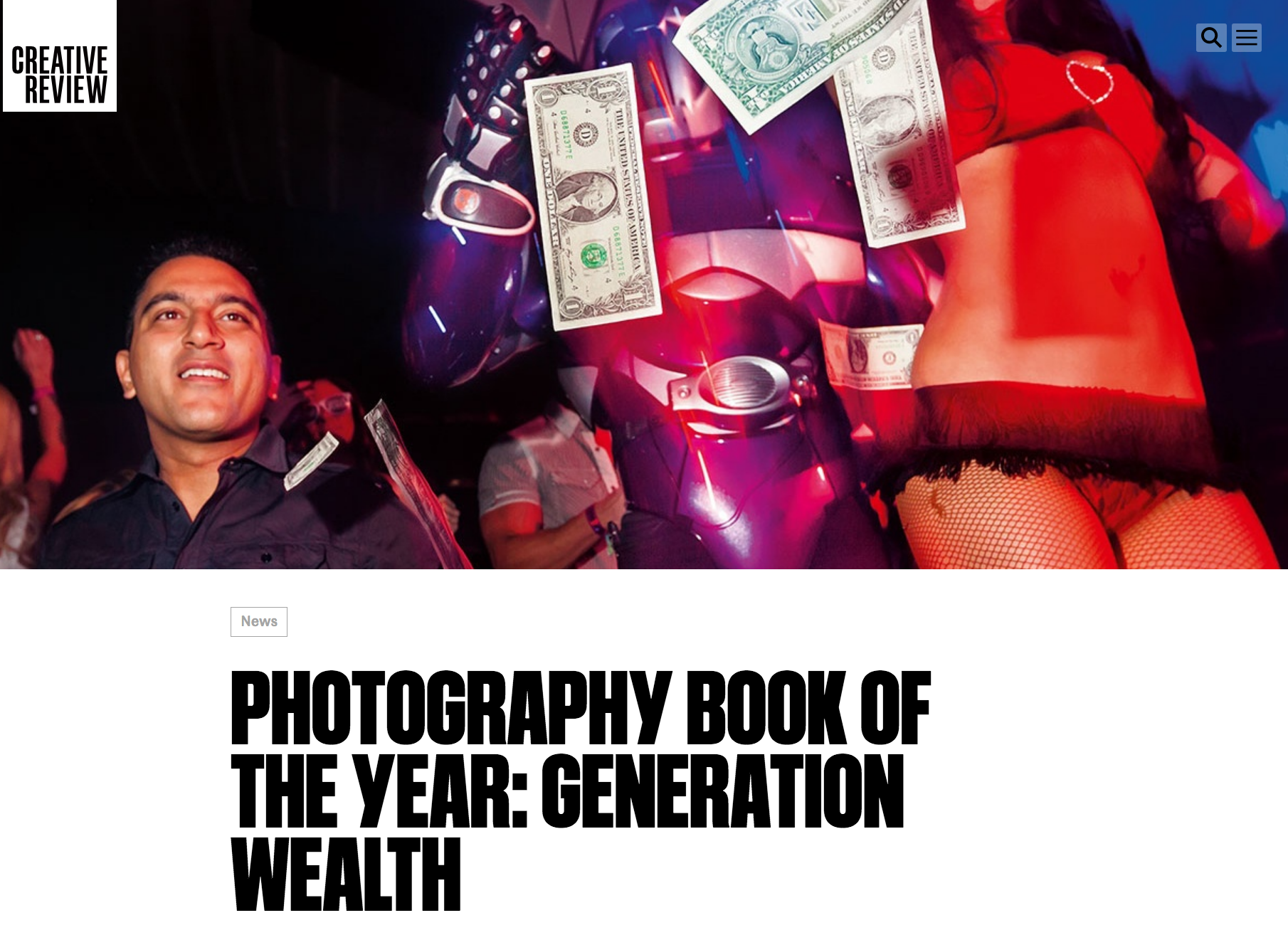
An examination of how wealth and consumerism has changed society, Lauren Greenfield’s Generation Wealth had a particular resonance in the year that Donald Trump became US President.
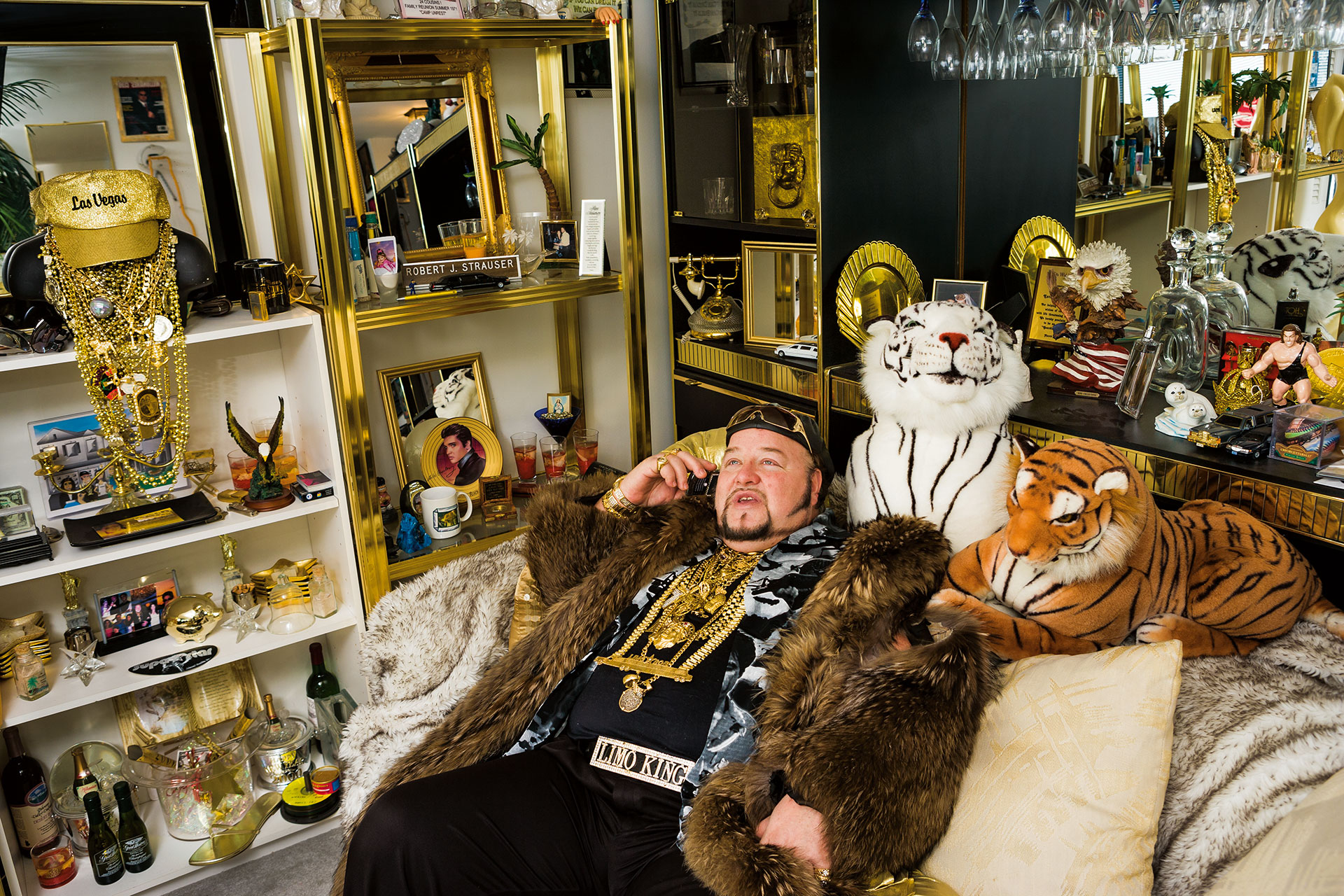
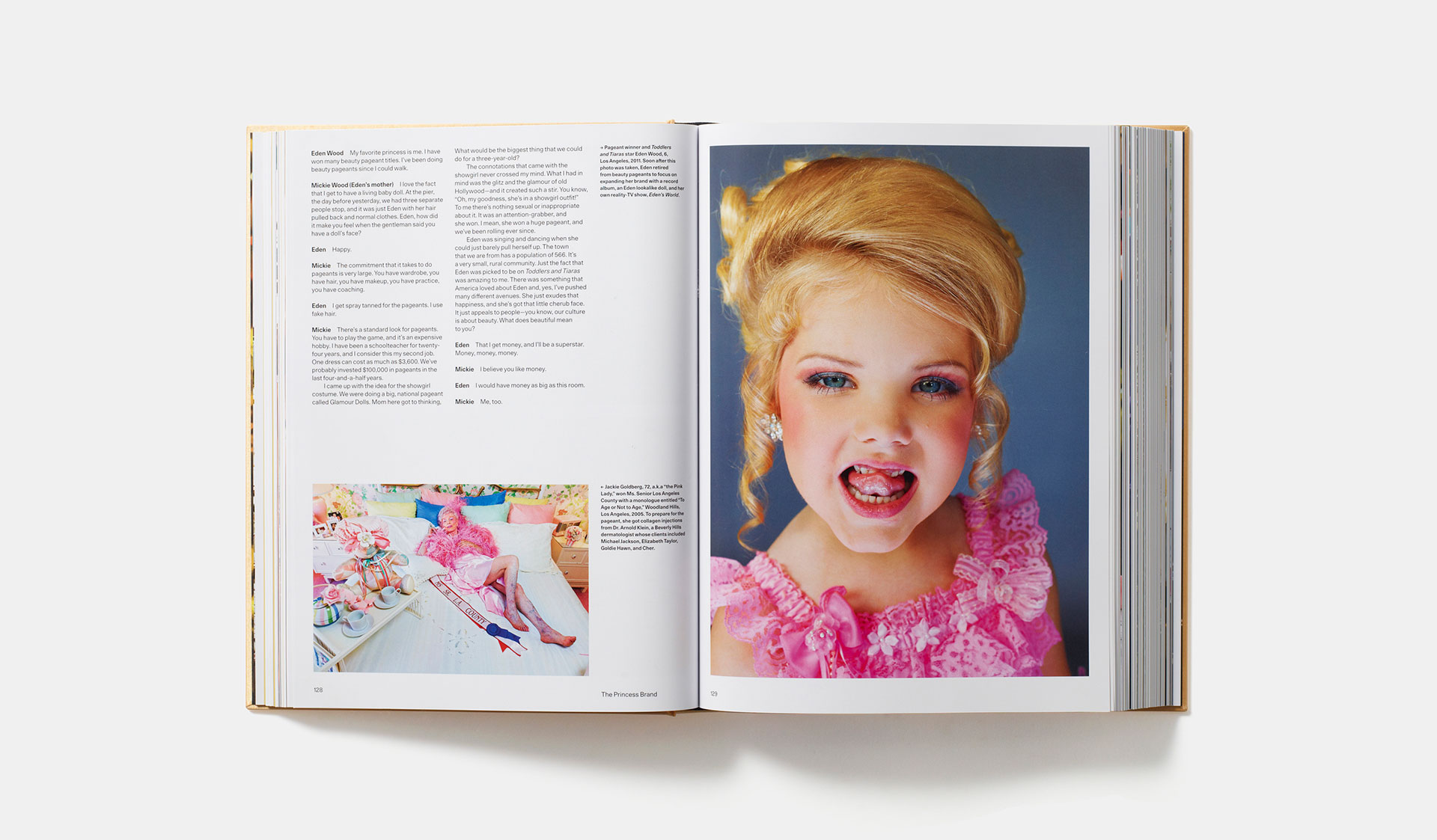
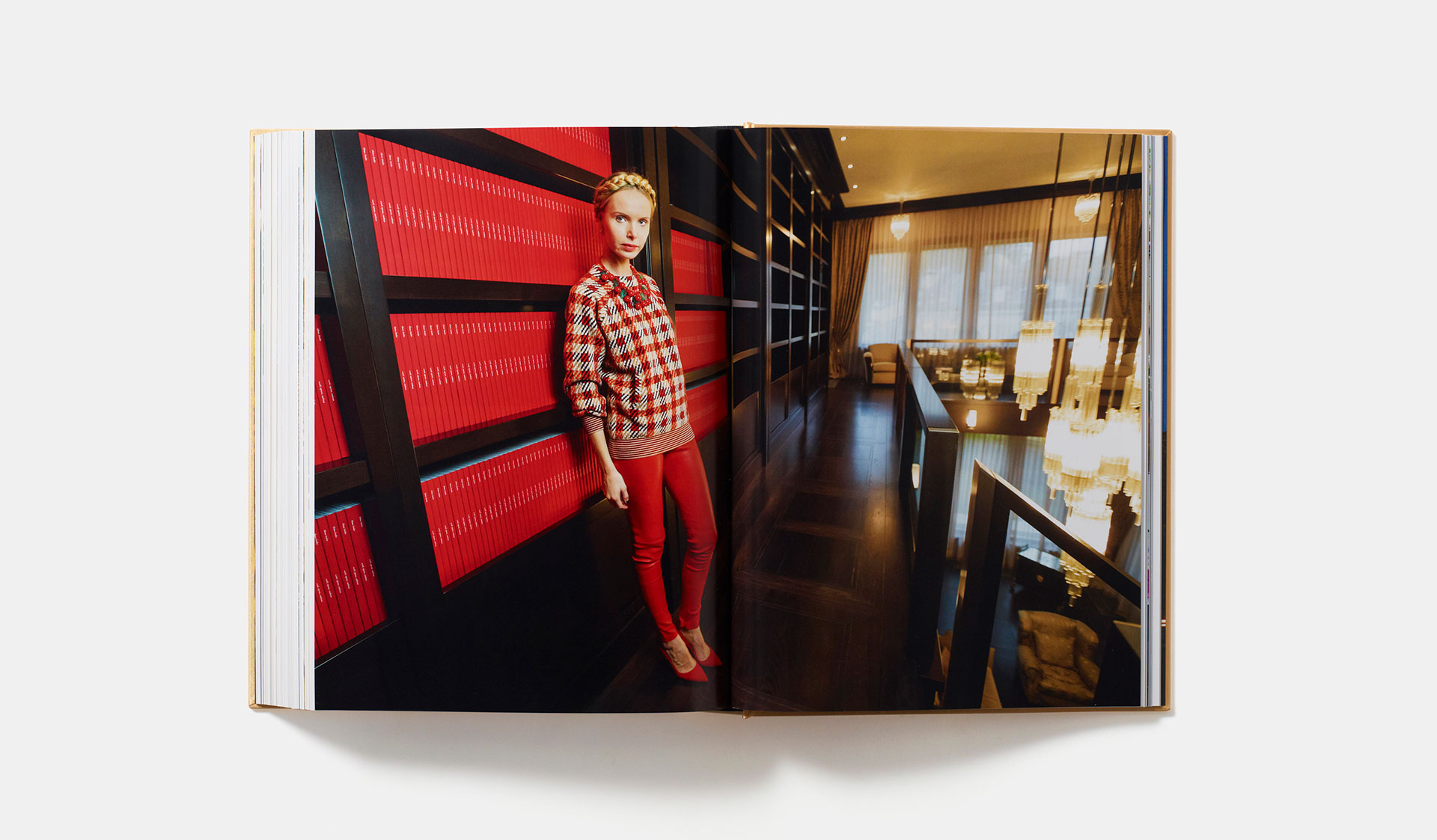
Running to over 600 pages of glossy, glamorous photographs, it might initially appear to be another luxury coffee table book. Yet its subject matter is far more urgent than that. Featuring imagery spanning several continents, Generation Wealth is the result of a 25-year investigation by Greenfield that documents our ongoing global obsession with wealth and materialism.
Donald Trump’s arrival in the White House can also be seen as an affirmation of the ideas explored by Greenfield. “[He represents] the expression of all the values that I’d looked at, even as superficial as the love for gold and the aesthetic of luxury,” say Greenfield. “And having beauty pageants, trafficking beautiful women, having women to be an expression of success … real estate as the central money maker … debt and bankruptcy … moral bankruptcy … fake it ‘til you make it – so many of the ideas.”
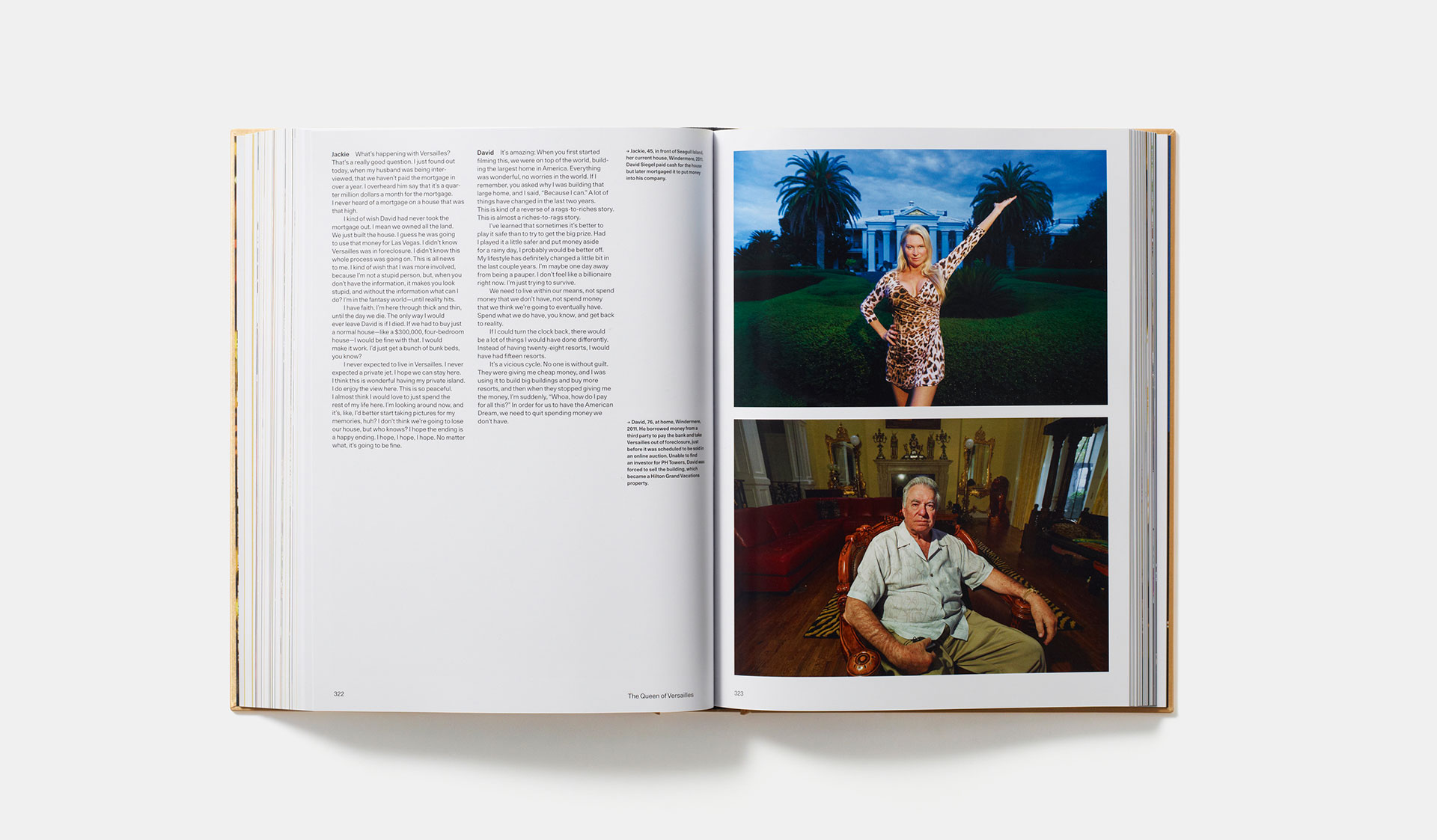
Greenfield is perhaps best known as a documentary filmmaker (as well as for the ad Like A Girl, which she directed) and she was first inspired to create the book while working on a film titled The Queen of Versailles, which followed the story of a billionaire family who were trying to build the largest house in America. Their plans were dramatically interrupted by the financial crash in 2008.
“They end up having a super-sized foreclosure story,” says Greenfield. “They’re over-leveraged like everybody else. So in a way they were this allegory that represented what I had seen in so many places, from suburban California to Ireland to Iceland to Dubai, and spoke to the kind of flaws that got us there, in a very global way. Seeing very similar kinds of imagery, and similar kinds of consequences in so many places throughout the world – and also from different socio-economic groups – made me think that all of these stories were somehow connected and the crash turned them into a morality tale.”
“I think we are doomed if we stay on this path. I don’t think this is sustainable.” Lauren Greenfield
Generation Wealth traces how this narrative has developed over the past three decades. It examines various themes, from how advertising has combined with the breakdown of community to create an addiction to goods and luxury, to the notion that even before you might become wealthy, it is b now acceptable to pretend you are, to ‘fake it ’til you make it’. The images from the early 1990s – despite featuring a 12 year-old Kim Kardashian and a teenager post-nose job – seem almost innocent in comparison to the extreme extravagance on show closer to the present day, which is at times both comical – a 24k gold toilet features, for instance – and disturbing.
The book is littered with scenes of bling, though its shininess conceals a more uncomfortable reality, told via interviews with the subjects featured in the photographs. “It’s a dark story,” Greenfield says. “I think it’s about conflating entertainment with reality, and how we’ve been overtaken by the values of materialism. How both that addiction to consumer culture, but also other aspects of modern life that I documented, have created a loneliness and emptiness that we try to fill with things. I think the book is dark but on the other hand, there’s also hope from the moments of insight from the characters.”
The book is fascinating, almost voyeuristically so, in part because the scenes on show are so extreme. Yet Greenfield asserts that its themes affect us all, no matter what our personal wealth and status may be. “I feel like it affects everybody, because part of the process that I’m documenting is how when you see it, you’re changed by it,” she says. “Part of it is about the exposure from the media – how that takes away our innocence, how it makes us want certain things, how that breeds desire, how that impacts our perceptions of the world. One of the things that I was interested in was the research that shows that affluent lifestyles have been increasing in the media since the 70s, and that seeing those images makes you think other people have more than they actually do and also stimulates desire. I think that exposure is everywhere.”
As to where all this consumption is leading us, the outlook, unsurprisingly, is bleak, according to Greenfield. Though she does offer a glimmer of hope. “I think we are doomed if we stay on this path,” she says. “I don’t think this is a sustainable path. [But] the reason I put it all together, and spent four years doing it, is I do feel like there are moments of insight in the book, by the characters – moments like the crash, where we can see the hamster wheel that we’re on and say ‘we don’t want to do that’. I believe in that possibility.
Generation Wealth is published by Phaidon, priced £59.95. During 2017, images from the book were exhibited at the Annenberg Space for Photography in Los Angeles (April 8–August 13) and the ICP Museum in New York (September 20–January 7, 2018). Greenfield is also working on a documentary film on the subject.
For more information on GENERATION WEALTH, visit the website here

InstituteTM (collectively Institute Pictures, Institute Studios, & Institute Artist) is redefining how stories are produced and told in the 21st Century. Founded by Producer Frank Evers and Director/Visual Artist Lauren Greenfield, we are a multiplatform production company representing auteur-driven storytellers across commercials, photography, fine art, film, and technology — and producing original work across every screen that those stories live on. Our multiplatform expertise and established global relationships in entertainment, commercial, fine art, and journalism create unmatched reach and cross-pollination of creative work. A film commission informs a photography campaign; a fine art practice shapes a commercial; an editorial relationship opens a documentary. Few companies operate fluently across all of these worlds. Institute was built this way from the ground up.
Clients include: Apple, Google, Meta, Amazon, Microsoft/Xbox, LinkedIn, WhatsApp, Nike, Adidas, Lululemon, Under Armour, Dove, Maybelline, Clinique, Ulta Beauty, Aesop, Vaseline, LEGO, Balenciaga, Dior, Tom Ford, Kenzo, Supreme, Van Cleef & Arpels, Mercedes-Benz, Volvo, Toyota, McLaren, Pennzoil, American Express, Chase, U.S. Bank, Burger King, Chobani, Corona, Pepsi, Nespresso, Lavazza, Velveeta, Airbnb, Four Seasons, Marriott, Instacart, eBay, JCPenney, Levi's, Swatch, Bang & Olufsen, Bayer, Pfizer, Genentech, EA, Planned Parenthood, Ad Council, and the United Nations. Editorial and publishing partners include: The New York Times Magazine, The New Yorker, GQ, Esquire, TIME, Bloomberg, National Geographic, The Economist, Monocle, Le Monde, Stern, Sunday Times Magazine, Phaidon, Steidl, Abrams, Prestel, Chronicle, and Random House.
“Institute” is a registered trademark in the US, Europe, and United Kingdom. All rights reserved.