
We Wanted Freedom
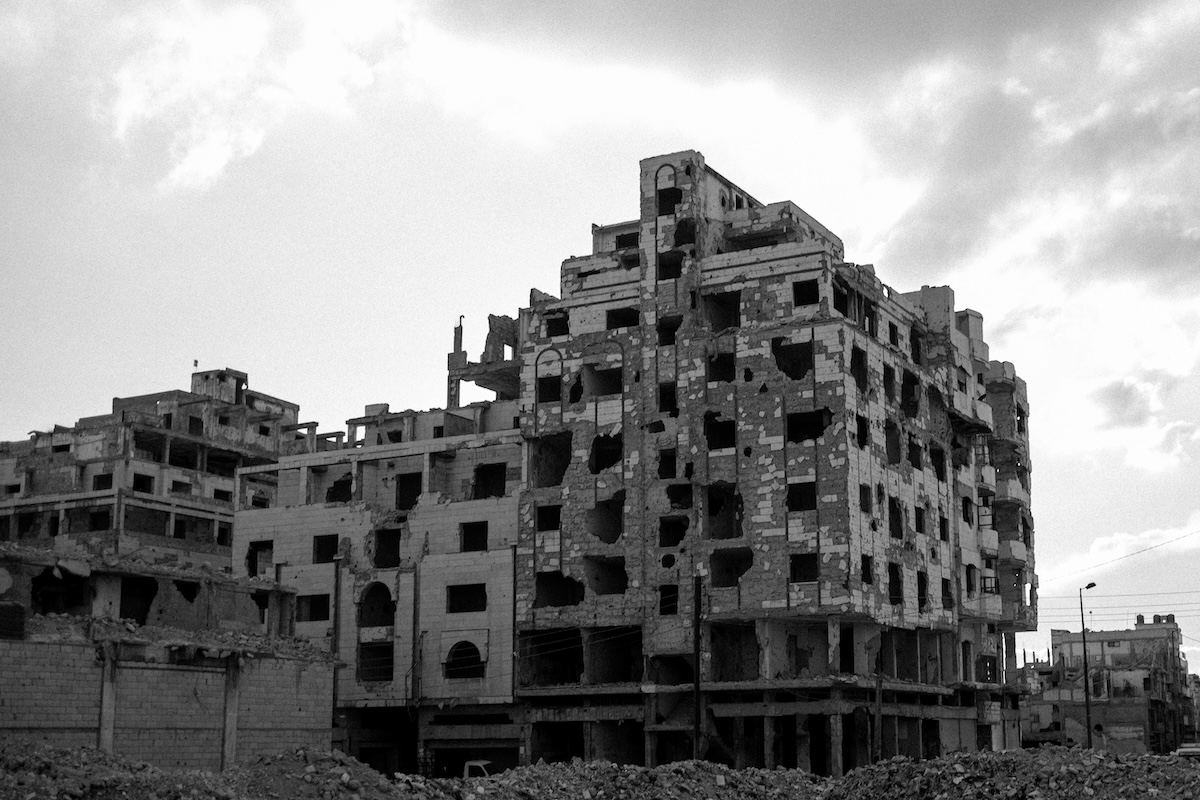
© Maxime CrozetAfter thirteen years of devastating war, Syria is slowly awakening from a nightmare. Since the fall of Bashar al-Assad's regime on December 8, 2024, the country has been trying to recover, rebuild, and relearn how to live. The M5 highway, the backbone of the country, still connects Aleppo in the north to Deraa in the south, passing through Homs, Hama, and Damascus—cities that have been battered but remain standing.
It was in Deraa that it all began in March 2011, when the first protests broke out after the arrest of young graffiti artists who dared to write on a wall: “The people want the regime to fall.” Heading north, the road leads to Damascus, long a bastion of power. The old city, a UNESCO World Heritage Site, is trying to heal its wounds. The Hamidiyah souk is once again buzzing with activity, albeit timidly. Minarets and churches still stand side by side, a reminder of Syria's diverse identity. Further north, Homs, the martyr city, symbolizes the Syrian tragedy. Parts of the city were razed by fighting between rebels and regime forces, and the city is slowly rising from its ruins. The Baba Amr and Khalidiyah neighbourhoods are now nothing more than concrete skeletons, but reconstruction is underway. Cafés are reappearing on the boulevards, children are playing in the streets—the same streets where snipers were shooting just a few years ago. Aleppo, a city with 2,000 years of history and once the country's economic capital, remains a huge construction site. The devastated old city is being rebuilt stone by stone. Craftsmen are returning and shops are reopening. Among the ruins, cranes stand tall, promising a better future. But the walls riddled with shrapnel are a reminder that peace remains fragile and mistrust has not yet disappeared. On the M5, the journey is also a journey through memory. Every kilometre recalls the years of war, but also the resilience of people who refuse to disappear. Post-Assad Syria is not yet at peace, but it is breathing again—slowly, painfully, with hope.
click to view the complete set of images in the archive




InstituteTM (collectively Institute Pictures, Institute Studios, & Institute Artist) is redefining how stories are produced and told in the 21st Century. Founded by Producer Frank Evers and Director/Visual Artist Lauren Greenfield, we are a multiplatform production company representing auteur-driven storytellers across commercials, photography, fine art, film, and technology — and producing original work across every screen that those stories live on. Our multiplatform expertise and established global relationships in entertainment, commercial, fine art, and journalism create unmatched reach and cross-pollination of creative work. A film commission informs a photography campaign; a fine art practice shapes a commercial; an editorial relationship opens a documentary. Few companies operate fluently across all of these worlds. Institute was built this way from the ground up.
Clients include: Apple, Google, Meta, Amazon, Microsoft/Xbox, LinkedIn, WhatsApp, Nike, Adidas, Lululemon, Under Armour, Dove, Maybelline, Clinique, Ulta Beauty, Aesop, Vaseline, LEGO, Balenciaga, Dior, Tom Ford, Kenzo, Supreme, Van Cleef & Arpels, Mercedes-Benz, Volvo, Toyota, McLaren, Pennzoil, American Express, Chase, U.S. Bank, Burger King, Chobani, Corona, Pepsi, Nespresso, Lavazza, Velveeta, Airbnb, Four Seasons, Marriott, Instacart, eBay, JCPenney, Levi's, Swatch, Bang & Olufsen, Bayer, Pfizer, Genentech, EA, Planned Parenthood, Ad Council, and the United Nations. Editorial and publishing partners include: The New York Times Magazine, The New Yorker, GQ, Esquire, TIME, Bloomberg, National Geographic, The Economist, Monocle, Le Monde, Stern, Sunday Times Magazine, Phaidon, Steidl, Abrams, Prestel, Chronicle, and Random House.
“Institute” is a registered trademark in the US, Europe, and United Kingdom. All rights reserved.